


It’s increasingly popular for ethically made bags and shoes. But what the heck IS vegan leather?
By Diane Small
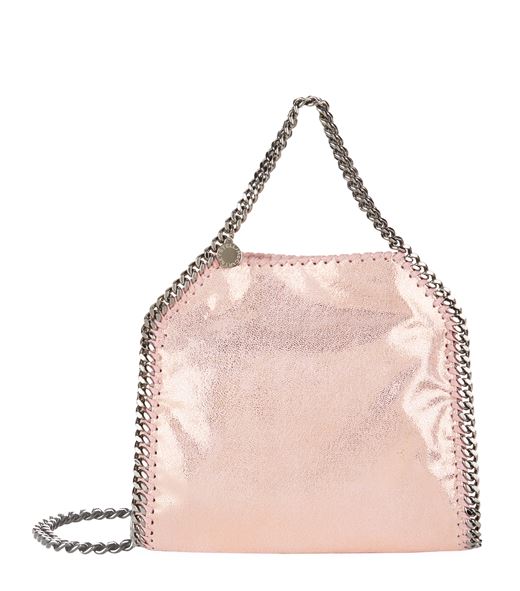
After hearing from my sister that the Falabella bag by Stella McCartney was constructed from a vegan leather substitute, and that Natalie Portman was starting her own vegan leather shoe line, I started to wonder: what the heck is meant by ‘vegan leather’ anyway? And is it really more eco-friendly than ‘normal’ leather?
This leather substitute is used to make clothing, shoes, accessories, upholstery and more. It’s often indistinguishable from the real thing. And it’s much cheaper to manufacture than leather. Even so, some designers, like McCartney, may well inflate the price.
An increasing number of vegan leathers are eco-friendly and plant-based. However, the vast majority of faux leather – a.k.a. ‘pleather’ or ‘leatherette’ has been around for decades. And unfortunately, it is still made of scary materials. These include polyvinyl chloride (PVC), polyurethane (PU) and textile-polymer composite microfibres.
In other words, generally speaking, ‘vegan leather’ reeks, literally and figuratively, of petroleum and/or chemicals.
The Environmental Impact of Real Leather
And it gets worse.
Both leather and vegan leather production emit chemicals harmful to environment and factory workers alike.
For ‘real’ leather, when raw animal hide is prepared for tanning, harmful substances like hydrogen sulfide and ammonia are used. These chemicals put factory workers at risk for skin, respiratory, ocular or nerve damage. Or in cases of extreme overexposure, death.
The next part of the tanning stage is highly necessary. This prevents hides from rotting (as normal skin would normally do). Chromium is the main chemical used. This often leaks into nearby soil and water. Even at low levels, it is carcinogenic and mutagenic. And a lot of it is needed! For every tonne of hide produced, 20-80 cubic metres of chemically toxic, pathogen-contaminated wastewater is unleashed on the environment.
What breaks my heart the most? Amazon rainforests are being depleted at a rate of one hectare every eighteen seconds by cattle ranchers looking to cash in on a bustling market for luxury leather items.
Is Vegan Leather Better?
Despite these eco-horrors, many eco-warriors find vegan leather production even worse.
For example, the manufacture and incineration of PVC-based synthetics produce one of the most toxic chemicals known to man: dioxins. Found in almost every single modern human’s body, dioxins promote developmental disturbances and increase cancer risks tenfold.
Plastic-based synthetics never fully biodegrade. Instead, they produce micro-particles that animals eat. Thus, they enter the food chain at all levels. Even Arctic polar bears have been found to have dioxins in their bloodstream!
And when it does break down, vegan leather releases phthalates. This is a harmful form of plastic that’s initially added as a softening agent. It too subsequently enters the food chain and the atmosphere. Phthalates cause serious health problems. These range from breathing problems, to breast cancers, hormonal disruptions and birth defects.

Microfiber, Mega Problem
So, what is vegan leather, according to the brands themselves? Many claim their products are made of ‘eco friendly’ PU (Polyurethane) microfibers. These are used because their ‘feel’ is similar to that of leather. PU can also be imprinted with grains that mimic suede and natural skins. But make no mistake: there is no such thing as ‘eco friendly’ PU.
In the production of microfiber-based synthetics, textiles and polymers are often layered together and compressed several times through metal rollers, then submersed in a coagulation solution to solidify. This chemical process requires excessive levels of toxic substances. These include dimethylformamide, which has also been linked to cancer and birth defects. And acetic acid, high doses of which can damage skin and eyes.
According to an article in the Observer, a study conducted in 2011 showed that 60-85% of human-made material found on shorelines consisted of microfibers from textiles. The leading author of the study, Mark Anthony Browne, is currently working with researchers at the University of South Wales and University of Sydney in Australia to create libraries of the different types of micro fibers omitted into the environment from our clothing and how they adversely affect aquatic life. His research has attracted the attention of marine science researchers and government agencies in Australia, Europe and USA but has received no support from major clothing brands.
Any Leather Alternatives?
If you’re not vegan, there are some somewhat more eco friendly alternatives to regular leather. Some manufacturers, including Valentino and the entire Gucci Group (now known as Kering) are very much aware of the issues surrounding leather production. They have now vowed to use only vegetable dyes and natural tanning processes. They will also slaughter only cattle raised on old farmland, as opposed to newly razed rain forests.
Valentino and Kering are also phasing out harmful PVC from their fashion goods. Unlike the allegedly ‘eco friendly’ house, Vivienne Westwood, which continues to use it in some of their bags and shoes.
Other brands are using alternative leathers, including fish and eel skins. These are usually thrown away as waste in the food production process.
What Is Eco Friendly Vegan Leather?
If you’re looking for eco-friendly vegan leather accessories, you’re in luck. As mentioned, there are few that are now being created from apple, pineapple, and cactus waste. These are great alternatives indeed.
Some argue that these still use plastic based polymers to bind them and make them more durable. That’s true, but the manufacturers have all said they are working on ending this for a more eco-friendly alternative. And guess what? Some animal leather also contain plastic based polymers.
Speaking of plastics, other vegan brands are upcycling PET bottles and other plastics into bags. While microparticle shedding of petrol-based materials is a serious issue in clothing, it’s not a concern for bags. This is due to the fact that unlike clothes, they’re rarely, if ever, laundered.
Finally, few leather alternatives beat the sustainability of those made from cork. Derived from the bark of cork oak trees, this material not only conserves forests, but biodegrades, too. It’s durable, waterproof, and no trees are harmed to make it.
The Choice Is Ours
Sure, ‘real’ leathers have been used by man for centuries. And when sourced from sustainable ranches and tanned and dyed naturally, these have the potential to be less damaging to the environment than most ‘vegan’ leathers.
Of course, animal advocates will abhor the use of hide leather, due to the fact that animals live miserable, short lives before dying for us to use their skins. And that is quite right. Oh, and by the way, leather for luxury goods is not always a by-product of the meat industry as most people believe.
The harsh reality is that most cheap ‘vegan leather’ is far from environmentally friendly. Unless it’s made from cork, plants or recycled materials, saying it is so is nothing but pure greenwashing.
Ultimately, it’s up to us to do our research on what vegan leather is made of, and shop according to our conscience. Personally, I’m just glad there’s a cork version of the Falabella!
Images: 1 & 4 Stella McCartney 2&3 Vivienne Westwood for Melissa

- Meet Ethical Fashion Designer Kelli Donovan - July 26, 2025
- 7 Of The Best Clean At Sephora Makeup Brands - July 13, 2025
- Eluxe Horoscopes For July 2025 - June 30, 2025