

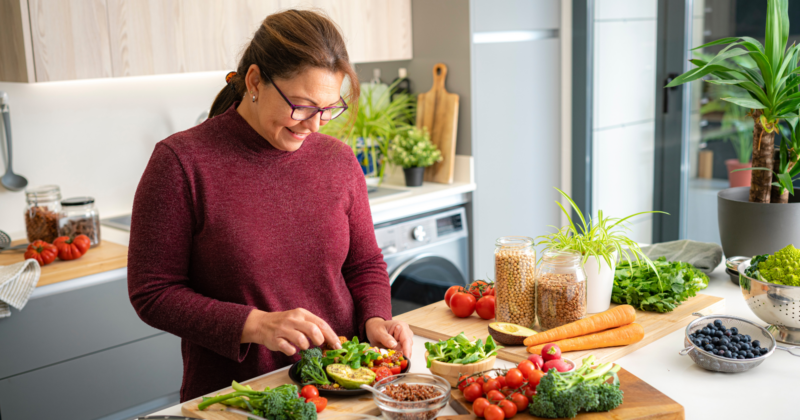
Last week, I stood in my kitchen at 7 PM, exhausted from work, staring at a butternut squash and wondering if I’d made a terrible mistake.
David had invited his colleague over for dinner, and I’d promised something special.
The kind of meal that would make them forget we were eating vegan.
Most people think gourmet vegan cooking means hours of prep, exotic ingredients, and techniques that belong in a professional kitchen.
They picture spending their entire Saturday sourcing specialty items from three different stores.
I used to think the same thing.
Then I discovered that creating restaurant-quality vegan dishes on a Wednesday night isn’t just possible.
Once you understand a few key principles, you can transform simple plant ingredients into meals that genuinely impress.
1) Master five base techniques that transform everything
The difference between amateur and professional cooking often comes down to technique, not time.
When I first started exploring plant-based cooking as a mindfulness practice, I noticed how certain methods consistently elevated simple ingredients.
Roasting vegetables at high heat creates caramelization that adds depth without any extra steps.
Quick-pickling adds brightness and complexity in under ten minutes.
Making cashew cream takes five minutes in a blender but creates richness that rivals dairy.
Learning to properly season at each stage of cooking builds layers of flavor.
Understanding umami sources like miso, nutritional yeast, and mushrooms gives your dishes that satisfying quality people can’t quite identify.
These aren’t complicated skills.
They’re simple shifts that make Tuesday’s dinner feel like something you’d pay $30 for at that new place downtown.
2) Build your pantry strategically
A well-stocked pantry eliminates half the stress of weeknight cooking.
I keep certain ingredients that instantly elevate any dish.
Good olive oil, aged balsamic, tahini, coconut milk, and quality spices form the foundation.
Add preserved lemons, capers, sun-dried tomatoes, and a variety of nuts.
These ingredients last for months and transform basic vegetables into something remarkable.
Think about it this way:
• Roasted cauliflower becomes spectacular with tahini sauce and pomegranate molasses
• Simple pasta turns gourmet with good olive oil, garlic, and preserved lemon
• Basic lentils become memorable with coconut milk and quality curry spices
• Regular vegetables transform with a drizzle of truffle oil
Stock your pantry once, and you’re always fifteen minutes away from impressive.
3) Choose recipes that look harder than they are
Some dishes create drama with minimal effort.
Stuffed portobello mushrooms with herbed quinoa and pine nuts take twenty minutes but look like you spent hours.
Individual ratatouille tarts using store-bought puff pastry appear incredibly sophisticated.
Beetroot carpaccio with orange segments and pistachios requires only slicing and arranging.
Vietnamese summer rolls with peanut sauce involve no cooking at all.
I learned this lesson when my book club came over unexpectedly.
With thirty minutes notice, I made roasted carrots with harissa and yogurt, served over herbed couscous.
They spent more time discussing the meal than the book.
The secret is choosing recipes where presentation does half the work.
4) Understand flavor pairing principles
Professional chefs rely on proven flavor combinations.
Sweet pairs with salty.
Acid brightens rich dishes.
Herbs add freshness to heavy ingredients.
Nuts provide textural contrast.
Once you internalize these principles, you can improvise confidently.
That butternut squash I mentioned earlier?
I roasted it with sage, topped it with candied walnuts and dried cranberries, then drizzled maple-tahini sauce over everything.
The combination of sweet, savory, creamy, and crunchy created complexity that felt intentional and refined.
These pairings work across cuisines.
Mexican black bean tacos with mango salsa.
Thai coconut soup with lime and chili.
Italian white beans with rosemary and lemon.
Understanding why flavors work together lets you create your own combinations.
5) Time management changes everything
Restaurant-quality doesn’t mean restaurant-timing.
Smart sequencing makes elaborate meals manageable.
Start grains or legumes first since they cook passively.
While those simmer, prep vegetables.
Roast everything on one sheet pan while you make a quick sauce.
I’ve developed a rhythm that works for my schedule.
Mornings involve five minutes of prep like soaking cashews or marinating tofu.
When I get home, half the work is already done.
This approach transformed my relationship with cooking.
Instead of viewing it as another task, it became a transition ritual between work and evening.
6) Presentation matters more than you think
The same meal can feel casual or elegant based purely on presentation.
White plates make colors pop.
A sprinkle of fresh herbs adds vibrancy.
A drizzle of sauce creates visual interest.
Serving family-style on beautiful platters feels more special than individual plates.
During one of my coffee dates with a friend, she mentioned she’d given up trying to make impressive vegan food.
I invited her over and served the exact lentil dal she makes regularly.
The only difference was garnishing with fresh cilantro, a swirl of coconut milk, and serving it alongside roasted vegetables arranged thoughtfully.
She couldn’t believe it was essentially her recipe.
Small touches create big impact.
7) Learn from different cultures
Many cultures have been creating sophisticated plant-based dishes for centuries.
Indian cuisine offers complex spice combinations and techniques.
Middle Eastern food celebrates vegetables as the main event.
Japanese cooking emphasizes simplicity and quality ingredients.
Ethiopian cuisine builds incredible flavors from basic legumes and vegetables.
Exploring these traditions expanded my weeknight repertoire dramatically.
A simple Japanese-inspired bowl with miso-glazed eggplant, edamame, and sesame spinach feels refined but takes twenty minutes.
Lebanese stuffed grape leaves seem fancy but use pantry staples.
Indian dal transforms humble lentils into something crave-worthy.
Each cuisine offers lessons in making plants the star.
8) Batch cooking without sacrificing freshness
Strategic prep preserves the feeling of fresh cooking while saving time.
Make versatile bases like cashew cream, pesto, or tahini sauce on Sunday.
Roast a variety of vegetables to use throughout the week.
Cook grains in larger batches.
But always finish dishes fresh.
Add herbs at the last minute.
Squeeze citrus just before serving.
Toast nuts right before adding them.
This hybrid approach gives you efficiency without the reheated-leftover feeling.
My herbs from the balcony garden make this especially satisfying.
Even in winter, fresh thyme or rosemary from my balcony transforms stored components into something that tastes just-made.
Final thoughts
That dinner with David’s colleague?
The butternut squash dish took twenty-five minutes total.
They asked for the recipe and couldn’t believe how simple it was.
Creating gourmet vegan meals on a weeknight isn’t about having more time or special skills.
You just need to approach cooking differently.
Focus on technique over complexity.
Build a smart pantry.
Choose impactful recipes.
Understand flavor principles.
Present thoughtfully.
Start with one new recipe this week.
Choose something that sounds impressive but has fewer than eight ingredients.
Notice how small shifts in technique and presentation transform simple ingredients.
Then build from there.
Fine dining at home isn’t an aspiration.
With the right approach, it’s just dinner.

- Why slow travel is the most sustainable kind — and what it actually looks like when you stop trying to see everything - April 15, 2026
- How choosing sustainable fashion finally made getting dressed feel like a pleasure rather than a decision I had to justify - April 15, 2026
- 8 gourmet vegan recipes that feel like fine dining — and are surprisingly achievable on a weeknight - April 15, 2026