

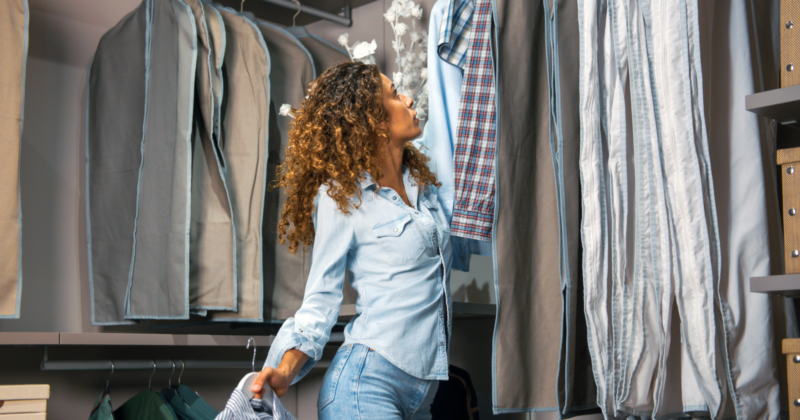
I’ve been staring at my closet for ten minutes, and I still have nothing to wear.
Sound familiar? You might have fifty pieces hanging there, each one purchased with excitement and promise. The blazer everyone was wearing last spring. The midi skirt that dominated your feed for months. The chunky sneakers that influencers swore would change your life. Yet somehow, standing there in your underwear at 7:30 in the morning, you feel like you have fewer options than ever.
I used to think this was just me being indecisive. But after years of working with clients who describe the same morning paralysis, I’ve realized something deeper is happening. The difference between a wardrobe built around trends and one built around intention isn’t just about clothes. It’s about whether you’re dressing from the outside in or the inside out.
The exhausting cycle of trend chasing
Let me paint you a picture of how trend-based shopping actually works. You see something everywhere. On Instagram, in stores, on that coworker who always looks put together. Your brain starts whispering: “You need this. You’re behind. Everyone has this but you.”
So you buy it. The dopamine hits immediately. You’ve solved the problem! You’re current! You belong!
Except three weeks later, that same piece feels wrong. Maybe because the trend has already shifted. Maybe because it never actually fit your life. Maybe because deep down, you bought it for someone else’s approval, not your own satisfaction.
I had a client recently who calculated she’d spent $5,000 in six months on trendy pieces. She wore each item an average of twice. Not because she was wasteful, but because each purchase was solving for external validation rather than internal need. She was dressing for an imaginary audience that never quite approved.
This pattern mirrors something I see constantly in relationships: when we make choices based on what we think others want from us, we end up feeling empty even when we “succeed.” The validation never fills the void because the void wasn’t about them in the first place.
What intentional dressing actually means
An intentional wardrobe starts with a radical question: What does your actual life look like?
Not your Instagram life. Not your fantasy life. Your real, Tuesday-through-Thursday, washing-dishes-and-walking-the-dog life.
When I shifted my counseling practice to include more writing time, my wardrobe needs shifted too. I needed pieces that could move from a morning writing session at a coffee shop to an afternoon with clients. Nothing too precious to survive real life. Nothing so trendy it would distract from the conversation.
Intentional dressing means buying the washable silk instead of the dry-clean-only version because you know yourself. It means choosing the comfortable boots over the painful but pretty ones because you actually walk places. It means having three perfect white shirts instead of twenty mediocre tops.
Here’s what this looks like in practice. Before any purchase, I ask myself three questions: Where will I wear this in the next month? What do I already own that it works with? Will I still want this if nobody ever sees me in it?
That last question is the killer. It strips away the performance aspect and leaves you with the truth: Do I actually like this, or do I just like the idea of being someone who wears this?
Why trends never feel like enough
There’s a reason trend-based wardrobes leave us feeling perpetually behind. They’re designed to.
The fashion cycle has accelerated to the point where things are out before most people even know they’re in. By the time you’ve bought the thing, styled the thing, and worn the thing, it’s already being replaced by the next thing. You’re always chasing, never arriving.
But here’s the deeper issue: trends ask you to abandon your own taste in favor of collective approval. Every trendy purchase is a small vote against your own instincts. You’re essentially saying, “I trust them more than I trust myself.”
I see this same pattern in people-pleasing behaviors. We override our own needs so consistently that we lose touch with what those needs even are. Then we wonder why nothing ever feels quite right, why we’re exhausted, why the approval we’re seeking never quite lands.
A wardrobe built on trends is like a relationship built on performance. It requires constant effort, endless updates, and vigilant monitoring of whether you’re doing it “right.” It’s exhausting because it’s supposed to be. The system profits from your insecurity.
Building from intention instead
So how do you shift from trend-chasing to intentional building?
Start with an audit. Not of what you own, but of how you actually live. Track your real outfits for two weeks. Where do you go? What do you do when you get there? What makes you feel capable versus constrained?
I discovered through this process that I wear black pants four days out of seven. Fighting this fact in favor of “variety” was making my life harder. Now I own four pairs of excellent black pants and zero guilt about it.
Next, identify your non-negotiables. For me, it’s pockets, natural fibers, and machine washability. For you, it might be color, stretch, or ethical production. These become your filter. If something doesn’t meet your non-negotiables, it doesn’t matter how trendy it is.
Then there’s the pause practice. When you feel the pull of a trend, write it down instead of buying it. Date it. Revisit in thirty days. If you still want it and can explain why without using the words “everyone,” “should,” or “in style,” consider it. Usually, the urgency evaporates within a week.
The freedom on the other side
Here’s what nobody tells you about an intentional wardrobe: it’s not restrictive. It’s liberating.
When every piece in your closet actually works for your actual life, getting dressed takes five minutes instead of fifty. When you trust your own taste, you stop second-guessing every choice. When you dress for yourself, you stop scanning rooms to see if you got it “right.”
I have a friend who’s worn variations of the same outfit for five years: white shirt, dark pants, interesting shoes. She looks incredible because she looks like herself. She never wonders what to wear because she already knows. That mental energy goes elsewhere, into her work, her relationships, her creativity.
This is what enough feels like. Not the frantic more-more-more of trends, but the calm sufficiency of knowing what serves you. Your closet becomes a tool, not a test. Your clothes support your life instead of demanding attention from it.
Final thoughts
The shift from trend-based to intentional isn’t just about spending less or owning less, though both might happen. It’s about reclaiming authority over your own choices.
Every time you choose based on your actual needs rather than manufactured desire, you strengthen your ability to trust yourself. This skill transfers everywhere: to your relationships, your career, your sense of self.
Start small. Choose one category, maybe shoes or bags, and make it entirely intentional. Feel the difference between choosing for yourself versus choosing for approval. Notice how different “enough” feels when you’re the one defining it.
Your closet doesn’t need to make you look like everyone else. It needs to make you feel like yourself. Only one of these approaches delivers that outcome, and deep down, you already know which one it is.

- 7 sustainable travel tips for Switzerland that go beyond taking the train: what conscious travellers actually do differently when they get there - April 19, 2026
- The clean haircare routine that genuinely changed the volume and health of my fine hair (and it has nothing to do with dry shampoo) - April 18, 2026
- 10 classic French patisserie recipes made entirely vegan, and impossible to tell the difference - April 18, 2026