

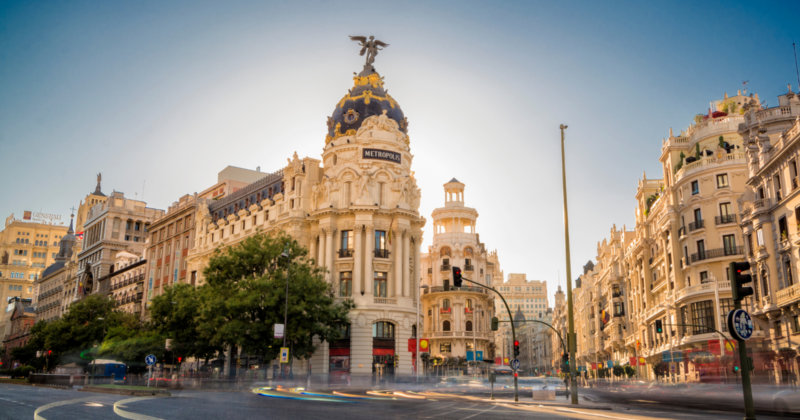
Last autumn, I sat in a crowded cafe in Spain, surrounded by tourist groups scrolling through their phones for the next must-see attraction.
The noise was overwhelming.
I realized I’d been doing Spain all wrong for years.
The cities that changed how I think about travel weren’t on any top-10 lists.
They were the places my guidebook barely mentioned, where locals outnumbered tourists ten to one, and where a single afternoon could stretch into something profound.
After exploring Spain’s quieter corners, I discovered that the most transformative travel happens when you stop chasing highlights and start following curiosity.
These seven cities taught me that lesson better than any meditation retreat ever could.
1) Cuenca: where houses hang from cliffs
Cuenca sits two hours southeast of Madrid by train, yet most visitors never make the journey.
The medieval city perches on limestone cliffs, with its famous hanging houses defying gravity and logic.
I spent four days here, mostly sitting in Plaza Mayor watching elderly locals play dominoes.
The pace was glacial.
Perfect.
What struck me most was how the city reveals itself slowly.
The first day, you notice the obvious things.
By day three, you start seeing the hidden Jewish quarter, the secret viewpoints, the tiny restaurants where no English is spoken.
The cathedral alone deserves an entire morning.
Not for photos, but for sitting in its strange angular light.
2) Cáceres: medieval time capsule in Extremadura
Extremadura might be Spain’s most overlooked region.
Cáceres, its crown jewel, feels frozen in the 15th century.
The old town contains more intact medieval architecture than almost anywhere in Europe.
No cars allowed.
Just cobblestones and silence.
I wandered these streets at dawn, before the few day-trippers arrived.
The city belongs to storks then, hundreds of them nesting on church towers.
• Palace of the Golfines de Abajo opens at 10am but go at closing time instead
• The Jewish Quarter Museum is unmarked, ask locals for directions
• Plaza San Jorge has the best sunset views, not the main square
• Tuesday market brings farmers from surrounding villages
At night, the illuminated stone walls create shadows that transport you centuries backward.
3) Santillana del Mar: the town of three lies
Locals call it “the town of three lies” because it’s not holy (Santa), not flat (llana), and not by the sea (del Mar).
This Cantabrian gem sits 30 minutes from Santander.
Medieval pilgrims passed through here heading to Santiago.
Now it sees mostly Spanish families on weekend trips.
The entire town is essentially one long cobblestone street lined with noble houses.
Each building tells a story through its coat of arms.
I learned this from a local who spent an hour explaining heraldry to me over coffee.
The nearby Altamira caves contain prehistoric art rivaling Lascaux.
But the real magic is the town at dusk, when day visitors leave and locals reclaim their streets.
4) Úbeda: Renaissance surprise in olive country
Andalusia holds more than flamenco and beaches.
Úbeda, surrounded by endless olive groves, contains Spain’s finest Renaissance architecture outside major cities.
The Plaza Vázquez de Molina could belong in Florence.
Except here, you might be the only visitor.
I stayed in a converted 16th-century palace for less than a modern hotel costs.
Morning coffee in the courtyard, surrounded by Renaissance columns, felt almost absurd.
The town shuts down from 2-5pm.
This forced siesta became my favorite part of each day.
Reading in shaded plazas.
Watching locals water their geraniums.
Understanding why hurrying makes no sense here.
5) Villajoyosa: the colorful secret
María Casbas notes that “Villajoyosa is a picturesque seaside town has more than a dozen beaches and coves along its coast.”
Yet most tourists speed past on their way to Benidorm.
The old town’s houses paint a rainbow along the waterfront.
Fishermen originally painted them bright colors so they could identify home from the sea.
Now these colors create one of Spain’s most photogenic streets that nobody knows about.
The chocolate factory museum sounds touristy but isn’t.
Local families have made chocolate here since 1810.
The smell alone justifies the visit.
Unlike nearby resort towns, Villajoyosa remains a working fishing port.
Watch the boats return at 4pm.
Buy seafood directly from fishermen.
This is coastal Spain before mass tourism arrived.
6) Ronda: drama on the edge
Ronda technically isn’t unknown, but most visitors stay two hours.
They photograph the bridge and leave.
This is precisely wrong.
The city demands at least three days to understand its layers.
Moorish baths, Spain’s oldest bullring, gardens hanging over the gorge.
I spent mornings walking the Tajo gorge path.
The dramatic 100-meter cliff divides the old Moorish town from the “new” 15th-century section.
Ernest Hemingway wrote here.
Orson Welles loved it so much his ashes are buried nearby.
They understood what quick visitors miss.
Evening is when Ronda transforms.
Spanish guitarists play in hidden squares.
Locals emerge for their paseo.
The gorge lights create shadows that feel almost supernatural.
7) Gijón: Atlantic soul in green Spain
Northern Spain confuses visitors expecting only sun and sangria.
Gijón offers Atlantic storms, Celtic heritage, and the best seafood in Spain.
The city faces the Bay of Biscay with defiant pride.
Roman baths, medieval towers, and modern art museums coexist without trying too hard.
The waterfront promenade stretches for miles.
I walked it daily, watching surfers battle Atlantic waves.
The old fishermen’s quarter, Cimadevilla, resists gentrification.
Cider houses pour from height to aerate the drink.
Locals still argue about politics over three-hour lunches.
This is urban Spain without the Instagram filter.
Final thoughts
Daniel James Clarke observes that “Spain boasts Europe’s longest high-speed rail network, second only to China globally.”
This network makes reaching these overlooked cities surprisingly easy.
Yet ease of access doesn’t equal popularity.
These seven cities taught me that memorable travel rarely happens in popular places.
The transformation comes from staying long enough to notice details.
From conversations with locals who’ve never met travelers from your country.
From discovering that your favorite Spanish memory involves sitting still, not checking off sights.
Where will you go when you stop following everyone else’s itinerary?

- People who live consciously tend to buy these 8 things for their living room and quietly never replace them - May 2, 2026
- 7 lesser-known Spanish cities that reward slow, intentional travel: and why the ones most tourists skip are consistently the most memorable - May 2, 2026
- 8 fashion upcycling ideas that turn what you already own into something you actually want to wear again - May 1, 2026