

Last week, I stood in line at a cafe on the Upper West Side, watching someone ahead of me order their usual morning latte.
Nothing unusual about that scene, except for the palm oil in their pastry, the plastic lid on their cup, and the casual scroll through social media while waiting.
Each of these tiny, everyday choices ripples outward in ways we rarely consider.
When I learned that we’re losing species at a rate 100 to 1,000 times faster than would occur naturally, something shifted in how I see my daily routines.
This isn’t about guilt or judgment.
It’s about understanding the unexpected connections between our ordinary habits and the survival of Earth’s most vulnerable creatures.
1) The vaquita porpoise and your morning seafood choices
With fewer than 10 individuals left in the wild, the vaquita porpoise holds the heartbreaking title of world’s most endangered marine mammal.
These small, shy creatures live exclusively in Mexico’s Gulf of California.
What’s pushing them toward extinction isn’t direct hunting—it’s fishing nets meant for another species entirely.
The demand for totoaba fish, prized for their swim bladders in traditional medicine markets, has created a deadly web of gillnets in vaquita habitat.
But here’s what surprised me: our everyday seafood choices, even thousands of miles away, contribute to this crisis.
When we buy seafood without checking its source, we support an industry that often operates with minimal oversight.
World Wildlife Fund notes that “Wildlife crime is a major driver of biodiversity loss, especially in regions endowed with rare and unique species.”
The illegal totoaba trade thrives because legal fishing operations provide cover.
Consider asking where your seafood comes from.
Look for certified sustainable options.
Those extra seconds at the grocery store might seem insignificant, but they add up to market pressure that can shift entire industries.
2) Javan rhinos and the furniture in your home
Only 75 Javan rhinos remain, all in Indonesia’s Ujung Kulon National Park.
Their biggest threat isn’t poaching anymore—it’s the loss of their forest home.
I recently helped a friend shop for a new dining table.
We spent hours comparing styles and prices, but never once did we think to ask about the wood’s origin.
That oversight connects directly to the Javan rhino’s plight.
Illegal logging for furniture and paper products continues to fragment Indonesia’s forests.
Even when companies claim sustainable sourcing, complex supply chains often obscure the truth.
The solution isn’t to stop buying furniture.
• Check for FSC (Forest Stewardship Council) certification
• Choose reclaimed or recycled wood when possible
• Support companies that transparently document their supply chains
• Consider quality pieces that last decades rather than trendy items you’ll replace in a few years
My own shift toward minimalism taught me that owning fewer, better things creates less demand overall.
3) Black-footed ferrets and your late-night online shopping
Once thought extinct, black-footed ferrets number around 300 in the wild today.
They depend entirely on prairie dogs for food and shelter.
Here’s the connection most people miss: agricultural expansion for cattle ranching has eliminated 95% of prairie dog colonies.
Why? Ranchers view prairie dogs as pests that compete with cattle for grass.
Every time we make food choices—from the beef in our burgers to the plant-based milk in our morning tea—we’re voting for how land gets used.
Agricultural intensification doesn’t just affect the animals we can see.
Elizabeth Kolbert puts it starkly: “Animals are disappearing at hundreds of times the normal rate, primarily because of shrinking habitats. Their biggest threat: humans.”
But there’s another surprising factor: our online shopping habits.
Distribution centers and warehouses continue to sprawl across former prairie lands.
That same-day delivery convenience comes at a cost we rarely calculate.
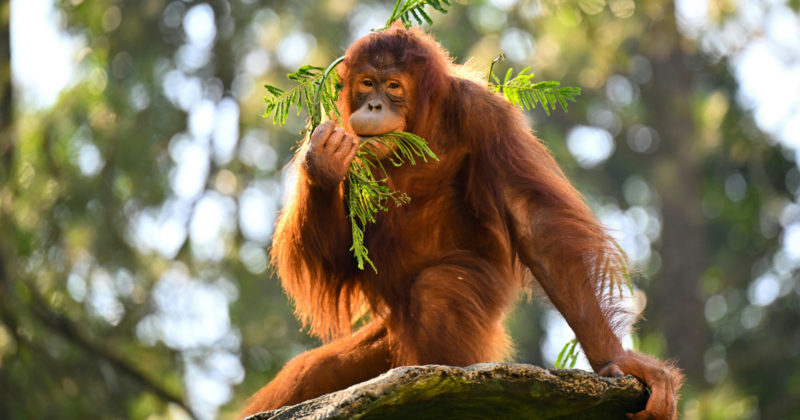
4) Tapanuli orangutans and your smartphone upgrade
Discovered as a separate species only in 2017, Tapanuli orangutans number fewer than 800.
They exist in a single forest in Sumatra.
The primary threat to their survival? A proposed hydroelectric dam that would flood crucial habitat.
But there’s a deeper issue.
The global demand for palm oil—found in everything from shampoo to cookies—drives continuous forest conversion.
Even more surprisingly, our electronic devices play a role.
Mining for rare earth elements used in smartphones and laptops often happens in biodiversity hotspots.
The average person upgrades their phone every two to three years.
I held onto my last phone for five years, and honestly, it worked fine.
The pressure to constantly upgrade isn’t about necessity—it’s about marketing.
5) North Atlantic right whales and your online shopping deliveries
Fewer than 340 North Atlantic right whales remain.
Ship strikes and fishing gear entanglement are their primary threats.
What does this have to do with your Amazon order?
International shipping has increased dramatically with the rise of e-commerce.
More ships mean more collisions.
More noise pollution that interferes with whale communication.
More risk of entanglement in abandoned fishing gear as vessels crowd traditional fishing areas.
World Wildlife Fund highlights that “The internet poses an unexpected threat to the world’s most endangered animals.”
They’re referring to illegal wildlife trade online, but the physical infrastructure of global e-commerce poses its own dangers.
I’ve started batching my online orders, choosing slower shipping options, and buying locally when possible.
These small changes won’t save the whales single-handedly, but they’re part of shifting our collective impact.
Final thoughts
During my morning meditation today, I found myself thinking about interconnection—not as some abstract concept, but as the literal reality of our world.
The tea we drink, the furniture we buy, the phones we scroll through.
Each choice creates ripples.
Some of those ripples reach the last 10 vaquitas swimming in Mexican waters or the final Javan rhinos browsing in Indonesian forests.
This isn’t about perfection.
I still order things online, still drink tea, still own a smartphone.
But awareness changes things.
When we understand these connections, we can make different choices.
Maybe not all the time, but more often.
Maybe not perfectly, but more consciously.
Start with one thing.
Pick one habit to examine more closely this week.
Research its impact.
Find one small way to reduce harm.
Because if our everyday habits can quietly make things worse for these species, they can also quietly make things better.
What will you choose to change first?

- 5 of the most endangered animals on earth and the everyday habits that are quietly making things worse for them - April 18, 2026
- The uncomfortable truth about cheap manicures: 7 things a conscious consumer should look for before booking - April 17, 2026
- 7 ethical jewellery brands that are genuinely worth the investment: exactly what makes them different from the rest - April 17, 2026