

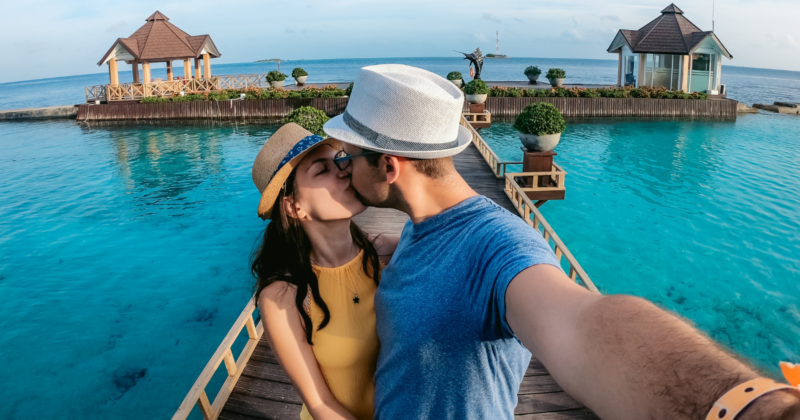
Last week, while scrolling through yet another couple’s perfectly curated honeymoon photos from Santorini, I found myself wondering something.
Why do we all end up in the same five places?
You know the ones. The infinity pools overlooking the caldera. The overwater bungalows everyone’s already seen a thousand times. The same sunset spots where you’ll wait in line with fifty other couples for that one iconic shot.
When David and I started planning our post-wedding escape, we realized we wanted something different. Not just beautiful, but meaningful. Not just romantic, but responsible.
We wanted to travel with intention.
Since then, I’ve discovered that the most transformative honeymoon destinations aren’t always the ones splashed across travel magazines. They’re the places that challenge you to slow down, connect deeply, and leave a positive footprint behind.
1) The azores, portugal: Where volcanic landscapes meet ocean conservation
Picture this. You’re soaking in a natural hot spring, surrounded by lush green hills, while the Atlantic Ocean stretches endlessly before you.
The Azores feel like Iceland’s warmer, more intimate cousin that nobody talks about.
These nine volcanic islands in the middle of the Atlantic have become a model for sustainable tourism. The local government caps visitor numbers. Hotels must meet strict environmental standards. Even whale watching tours follow some of the world’s most protective marine guidelines.
What struck me most was the sense of genuine isolation. Not lonely isolation, but the kind that makes you realize how noisy your everyday life has become.
You can hike to hidden waterfalls without encountering another soul. Swim in natural pools carved by ancient lava flows. Watch sperm whales breach from responsible distances.
The islands run almost entirely on renewable energy. When you stay here, you’re supporting a community that chose preservation over mass tourism profits.
2) Palawan, philippines: The island that said no to overdevelopment
While everyone rushes to Boracay or Bali, Palawan quietly maintains its boundaries.
Brittany Anas notes that “Bali is also home to a wealth of luxury resorts, along with everything from rice-field strolls and temple visits to yoga and meditation sessions.” But Palawan offers something Bali increasingly struggles with. Space to breathe.
The local communities here have fought hard against large resort chains. Instead, you’ll find locally-owned eco-lodges built with indigenous materials. Solar panels power your morning coffee. Rainwater collection systems fill your shower.
El Nido’s limestone cliffs rise dramatically from turquoise waters, but tour operators limit boat numbers to protect coral reefs.
In Coron, you can dive in crystal-clear lakes surrounded by jungle, knowing your entrance fees directly support the indigenous Tagbanua people who manage these sacred sites.
The real magic happens when you venture beyond the main spots. Small islands with just one or two eco-resorts. Beach cleanups that turn into sunset celebrations with locals. Meals cooked by families who’ve lived here for generations.
3) Faroe islands: Where sheep outnumber tourists 70 to 1
Eighteen islands in the North Atlantic. Population: 50,000 people and 80,000 sheep.
If you’re imagining somewhere remote, you’re on the right track.
The Faroe Islands closed several popular tourist sites recently. Not because of damage, but preemptively. They saw what happened to Iceland and chose a different path.
Here’s what makes it perfect for intentional travelers:
• All electricity comes from renewable sources by 2030
• Locals volunteer as guides to prevent overcrowding at sensitive sites
• Traditional grass-roof houses aren’t just for show – they’re still lived in
• Tourism revenue goes directly to conservation projects
• Ferry systems run on hybrid engines
Weather changes every ten minutes. You might experience sunshine, rain, fog, and wind in a single afternoon. This isn’t a lounging-by-the-pool destination. This is for couples who find romance in dramatic landscapes and cozy evenings by the fire after windswept hikes.
The locals have a saying: “There’s no such thing as bad weather, only bad clothes.”
Pack accordingly.
4) Tasmania, australia: The wilderness island choosing quality over quantity
Tasmania made a radical decision. Instead of marketing to everyone, they specifically target travelers who care about conservation.
Forty percent of the island is protected wilderness.
The Three Capes Track limits walker numbers. The Bay of Fires eco-lodge runs entirely off-grid. Even the Museum of Old and New Art, despite its popularity, maintains an appointment system to prevent overcrowding.
What resonates with me about Tasmania is the integration of indigenous knowledge. Aboriginal guides lead tours that existed as trade routes for 40,000 years. You’re not just seeing beautiful places. You’re understanding their stories.
The food scene reflects this same intentionality. Restaurants source within thirty kilometers. Whisky distilleries use local peat. Cheese makers know their cows by name.
5) Slovenia: Europe’s best-kept sustainable secret
Slovenia was the first country declared a Global Green Destination.
Yet most people still can’t point to it on a map.
Ljubljana banned cars from its center. The entire country has more than 22,000 animal species and 60% forest coverage. Hotels earn green certificates not through greenwashing, but through rigorous environmental audits.
Lake Bled gets the Instagram attention, but venture deeper. The Soča Valley’s emerald river offers rafting through pristine gorges. Vineyards practice biodynamic farming methods passed down through centuries. Cave systems stretch for kilometers underground, carefully managed to preserve blind cave salamanders found nowhere else on Earth.
6) Bhutan: Where happiness matters more than profit
Bhutan charges a daily sustainable development fee. $200 per person.
This immediately filters out casual tourists.
The fee funds free education and healthcare for locals. Carbon negativity isn’t a goal here – it’s already achieved. The constitution requires 60% forest coverage forever.
You can’t travel independently. A guide ensures you respect cultural sites and understand local customs. Hotels blend traditional architecture with modern comfort. Meals feature organic produce from nearby farms.
During a meditation retreat there, I experienced something profound. Silence that wasn’t just absence of noise, but presence of peace.
The Bhutanese concept of Gross National Happiness isn’t marketing. Walk through any village and you’ll feel it.
7) Lofoten islands, norway: Arctic beauty with boundaries
Above the Arctic Circle, the Lofoten Islands jut dramatically from the Norwegian Sea.
Red fishing cabins dot the coastline. Northern lights dance overhead in winter. Midnight sun illuminates summer nights.
But here’s what’s different. Local communities actively manage tourism growth. Parking limitations protect fragile areas. Camping restrictions preserve private land. Even Instagram-famous beaches have implemented visitor guidelines.
Sustainable fishing practices mean the seafood on your plate was caught responsibly. Hotels generate their own renewable energy. The famous rorbuer (fishermen’s cabins) have been renovated with eco-friendly materials while maintaining their authentic character.
8) Costa rica’s osa peninsula: Where 2.5% of earth’s biodiversity thrives
The Osa Peninsula contains more biodiversity than entire countries.
While Costa Rica’s reputation for ecotourism is well-established, the Osa remains relatively untouched. No large resorts. No golf courses. No shopping centers.
Ecolodges here aren’t just hotels with recycling bins. They’re research stations where your stay funds jaguar conservation. They’re permaculture farms teaching sustainable agriculture. They’re platforms in the canopy where you fall asleep to howler monkeys and wake to scarlet macaws.
The remoteness is intentional. Roads remain unpaved to limit development. Visitor numbers to Corcovado National Park are capped daily.
You’ll share trails with tapirs, not tour groups.
Final thoughts
Condé Nast Traveler suggests that “A good resort tailored to honeymoons is great because they tend to throw in loads of romantic extras like dinner on the beach or couples massages.”
But maybe romance looks different when you’re traveling with intention.
Maybe it’s watching the sunrise from a mountain you climbed together. Maybe it’s learning to make traditional bread from an elderly woman in her kitchen. Maybe it’s knowing your trip supported a community’s decision to preserve rather than profit.
These eight destinations won’t give you the same photos everyone else has. They won’t offer unlimited poolside cocktails or butler service.
They’ll give you something else.
The chance to start your marriage not just as tourists, but as travelers. Not just as consumers, but as contributors.
Where will your values take you?

- Everything conscious parents need to know about raising a vegan baby: the recipes, the nutrition basics, and the questions worth asking your paediatrician - April 27, 2026
- The honeymoon destinations that feel like the world’s best kept secrets: 8 sustainable places built for couples who travel with intention - April 27, 2026
- 7 eco-conscious honeymoon destinations for couples who want beauty, intimacy, and a clear conscience about where their money is going - April 26, 2026