

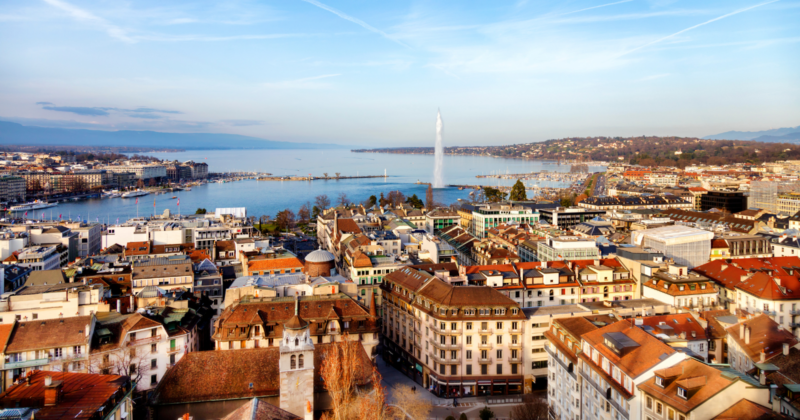
Having just stepped off the train at Gare Cornavin, the crisp Alpine air carried hints of fresh bread from nearby bakeries and that distinct scent of lake water that defines Geneva. The morning light reflected off tram windows as they glided silently past on electric tracks, while locals wheeled their bikes toward the free rental stands. This was my first taste of a city that makes sustainable living feel effortless rather than forced.
Where to stay with purpose
Finding eco-conscious accommodation in Geneva doesn’t mean sacrificing comfort or convenience. The city’s hotels have embraced sustainability in ways that enhance rather than diminish the guest experience.
Take the Beau-Rivage Geneva, for instance. Forbes Travel Guide notes that “The Geneva gem also focuses on sustainable luxury. To maximize comfort in an eco-friendly fashion, the hotel is cooled by the waters of Lake Geneva instead of air conditioning, meaning those hot Switzerland summer days, where temperatures reach over 85 degrees Fahrenheit, still feel just right.” This approach proves that environmental innovation can actually improve comfort rather than compromise it.
For budget travelers, the City Hostel Geneva became my unexpected favorite. Switzerland’s first carbon-neutral accommodation doesn’t just tick boxes; it creates community. The shared kitchen encouraged me to explore local markets, while the rooftop garden supplied herbs for communal dinners. I met a couple from Portugal who’d been returning annually for five years, drawn back by the hostel’s genuine commitment to both sustainability and connection.
Smaller guesthouses in residential neighborhoods offer another path. I discovered a family-run pension in Carouge where breakfast featured jam made from their backyard fruit trees and eggs from a neighbor’s chickens. These places might lack corporate polish, but they overflow with character and genuine environmental stewardship.
What to eat without the waste
Geneva’s food scene challenged my assumptions about sustainable dining. Rather than limiting options, the focus on local and seasonal ingredients opened doors to flavors I’d never have discovered otherwise.
The weekend market at Plainpalais became my Saturday morning ritual. Armed with a canvas bag and terrible French, I learned to navigate stalls selling everything from raw milk cheese to purple carrots I’d never seen before. One vendor taught me to identify truly local apples by their imperfect shapes, explaining that uniform fruit usually travels farther. These conversations transformed shopping from transaction to education.
Restaurant Vieux-Bois, tucked behind the university, operates on a radical principle: the menu changes daily based on what local farms deliver that morning. My server explained they’d rather run out of popular dishes than compromise on sourcing. This philosophy initially frustrated me when I couldn’t order what I’d planned, but the suggested alternative, a lake fish I’d never heard of with foraged mushrooms, became the meal I still dream about.
For quick lunches, I gravitated toward the growing number of zero-waste cafés. These spaces feel more like community centers than restaurants, with bulletin boards advertising repair workshops and shelves stocked with package-free groceries. Watching my sandwich being wrapped in beeswax cloth instead of plastic felt like witnessing a small revolution.
How to navigate without the carbon footprint
Geneva’s public transport runs entirely on renewable energy, a fact that transformed how I viewed each journey. The free transport card provided by every hotel removes financial barriers to sustainable choices. Why grab a taxi when the tram arrives every seven minutes?
But the real revelation was cycling. The Genève Roule system offers free bikes for four-hour loans, no deposit required. My first attempt at navigating the city by bike felt intimidating until I discovered the lakeside path, completely separated from traffic. That 30-minute ride from the UN district to the old town, passing sailing boats and swimming spots, beat any taxi ride I’ve ever taken.
Walking unveiled layers of the city that faster transport obscures. The 20-minute stroll from my accommodation to the Museum of Modern Art led through a community garden where residents tended plots between apartment buildings. An elderly man watering tomatoes invited me to taste his prized variety, a moment that wouldn’t have happened from inside a vehicle.
Making choices that matter
Christopher Elliott, reflecting on Swiss sustainability efforts, observes that “The whole point of sustainability in tourism is making it accessible for guests so that it is enjoyable.” Geneva embodies this philosophy through infrastructure that makes green choices the easy choices.
Public water fountains marked “eau potable” appear every few blocks, eliminating excuses for buying plastic bottles. Museums offer evening discounts that spread visitor impact while creating a more intimate viewing experience. Even shopping becomes sustainable when stores charge for bags but provide sturdy alternatives designed for years of use.
I learned to time my visits to popular sites for early morning or late afternoon, reducing crowding while enjoying better light for photos. Supporting businesses in residential areas rather than tourist zones meant better prices and authentic interactions. A bookshop owner in Eaux-Vives spent an hour recommending Swiss authors after learning about my interest in European approaches to work-life balance.
The concept of “slow travel” took on new meaning when I spent an entire afternoon at Bains des Pâquis, the public bath complex on the lake. For the price of a coffee, I accessed saunas, swimming areas, and sunset views that tour groups rush past. These unhurried experiences, ironically, became my most vivid memories.
Final thoughts
Geneva taught me that sustainable travel enhances rather than restricts adventure. Each eco-conscious choice, from refilling my water bottle at public fountains to choosing trams over taxis, connected me more deeply to the city’s rhythm and values.
The Swiss approach feels less about rules and more about respect, for the environment, for local communities, for the future. When travel aligns with values, even mundane decisions become meaningful. That morning coffee tastes better knowing the beans were fairly traded, the bike ride feels more free knowing it produces no emissions, the locally-sourced meal satisfies beyond mere hunger.
You don’t need to be perfect to travel sustainably in Geneva. The city’s infrastructure and culture support incremental improvements, small choices that accumulate into significant impact. My week there proved that leaving a lighter footprint doesn’t mean having a lighter experience. Sometimes, the most conscious path leads to the richest discoveries.

- 8 things to do in Copenhagen that make you feel like a local rather than a tourist: a guide for travellers who want to arrive, not just visit - April 24, 2026
- How the beauty industry created the skin problems it now sells you the solution to — and the 8 clean alternatives that actually help - April 24, 2026
- I’ve collected recipes from clients and friends for years: these are the 8 vegan breakfasts that everyone always asks me for - April 24, 2026