

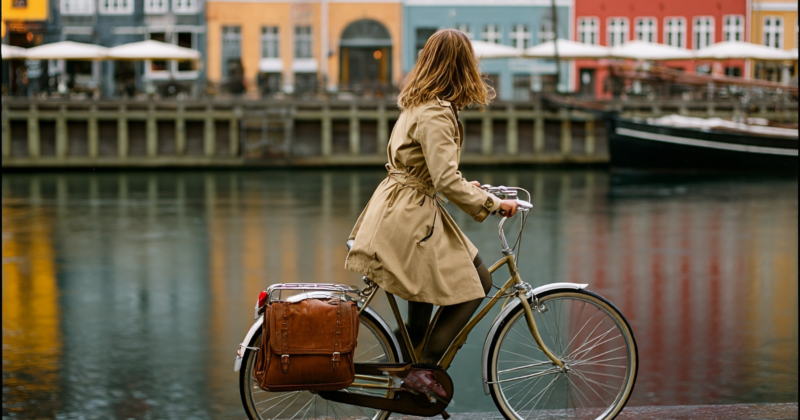
Picture this: You’re standing in Copenhagen’s famous Nyhavn, surrounded by colorful buildings and canal boats, your phone raised for that perfect Instagram shot. Around you, dozens of other tourists do exactly the same thing. You check this iconic spot off your list, move to the next attraction, and by evening, you’ve “seen” Copenhagen. But have you actually experienced it?
After years of helping couples distinguish between going through the motions and truly connecting, I’ve noticed travel works the same way. We can perform tourism, hitting all the highlights, or we can actually arrive somewhere, letting a place change our daily rhythm. During my recent month in Copenhagen, I discovered that feeling like a local isn’t about knowing secret spots. It’s about shifting from consuming experiences to participating in them.
1. Rent a bike and use it for groceries, not sightseeing
Forget the guided bike tours. Instead, grab one of those green city bikes and head to Irma or Netto for your weekly shopping. Balance your groceries on the handlebars like everyone else does. Navigate the bike lanes during rush hour when thousands of Copenhageners commute by bicycle.
Visit Copenhagen notes that “Copenhagen is a biker’s paradise, as nearly every road has a bike lane or designated space for bikes.” But here’s what the tourism board doesn’t tell you: the magic isn’t in cycling past monuments. It’s in stopping at red lights next to office workers, all of you heading somewhere ordinary.
I learned this when my back tire went flat near Østerbro. A woman in business clothes stopped, pulled out a repair kit, and helped me fix it in three minutes. No fanfare, no exchange of names, just practical kindness between two people trying to get somewhere. That’s Copenhagen cycling culture, participation, not observation.
2. Take morning coffee standing at a street kiosk
Skip the cozy cafes featured in travel blogs. Find one of those tiny kiosks scattered throughout residential neighborhoods. Order your coffee, then stand outside drinking it, even if it’s drizzling. Watch locals stop by on their way to work, exchanging brief Danish pleasantries with the owner.
At first, this felt uncomfortable. Why stand in 10-degree weather when warm cafes exist everywhere? But after a week, I understood. These kiosk moments create what I call “bridging rituals” in my practice, brief, repeated interactions that build community without demanding deep engagement. The kiosk owner near my rental started preparing my usual order when she saw me approaching. We never had a long conversation, but we acknowledged each other daily. That’s how belonging actually develops, through repetition, not intensity.
3. Swim in the harbor with office workers, not tourists
While visitors line up for canal boat tours, locals swim in the harbor at Islands Brygge Havnebadet. The key? Go on a weekday around 4 PM when people stop by after work. Don’t make it an event. Bring a simple towel, swim for ten minutes, then sit on the wooden platforms eating an apple while you dry off.
The unspoken rules fascinated me. People maintain careful distances between groups, voices stay low, and everyone respects the designated lap lanes versus casual swimming areas. It reminds me of what I teach about boundaries, they work best when everyone understands them implicitly, without constant negotiation.
4. Shop at genbrugs (thrift stores) in Nørrebro
Forget the designer boutiques downtown. Head to the second-hand shops along Nørrebrogade where locals actually shop. These aren’t vintage stores with curated collections and high prices. They’re charity shops where Danes drop off last season’s clothes and furniture, then buy what others have donated.
I found a hand-knitted wool sweater for 60 DKK at Røde Kors. The volunteer folding donations told me most Danish families rotate their entire households through these shops. Children’s clothes, kitchen items, even electronics flow through this circular system. This approach to consumption reflects something deeper about Danish culture, sufficiency over excess, community resources over individual accumulation.
5. Join the communal dinner at Absalon
Every evening, Absalon (a former church turned community center) hosts communal dinners where you sit at long tables with strangers. There’s no menu choice. You eat what they serve, family-style, for about 75 DKK. Wednesdays draw the biggest local crowd.
The setup initially triggered my control issues. No choosing your seat, your meal, or your dinner companions? But that’s exactly the point. When you remove choice overload, something else emerges: genuine conversation. I sat between a plumber and a PhD student, passing bowls of roasted vegetables while discussing everything from Danish politics to the best local swimming pools. Without the option to retreat to phones or familiar faces, we actually engaged.
6. Spend saturday morning at a local sports club
Every neighborhood has a sports klub where families gather on weekend mornings. You don’t need to join officially. Show up at Københavns Boldklub or Frem with a coffee and watch from the sidelines. Parents chat while kids play football, elderly members maintain the grounds, and everyone seems to know each other’s names.
I started visiting B.93’s field in Østerbro after my morning runs. Nobody questioned my presence. A grandfather taught me Danish football chants while his granddaughter practiced penalty kicks. These clubs function like extended living rooms for their neighborhoods, spaces where community happens organically through shared routines rather than organized events.
7. Buy flowers at the cemetery (yes, really)
Assistens Cemetery doubles as a neighborhood park where locals jog, picnic, and walk dogs between the headstones. But here’s what guidebooks miss: the small flower shop at the entrance sells the freshest, cheapest flowers in the city because they supply funeral arrangements. Locals buy their weekly bouquets here.
Every Friday, I watched the same customers arrive for their flowers. The shop owner knew their preferences, had orders wrapped and waiting. This intersection of death and daily life, neither morbid nor avoided, reflects Danish pragmatism. As research from the Center for Tourism and Hospitality Management reveals, media framing significantly influences how we perceive tourism spaces versus local spaces. The cemetery resists tourist framing entirely, it simply exists as neighborhood infrastructure.
8. Take the S-tog to the end of any line
Pick any S-train line and ride it to its final stop. No research, no plan. Get off and walk the neighborhood. Buy lunch from whatever shop you find. Sit in the local library. Watch kids get out of school at 3 PM.
I ended up in Holte one gray afternoon. Nothing Instagram-worthy happened. I ate a mediocre sandwich from a convenience store, walked through unremarkable residential streets, and sat in a small park watching teenagers practice skateboard tricks. But this ordinariness taught me something. Real life in any city is mostly mundane. When we chase only peak experiences while traveling, we miss the baseline, the rhythm that actual residents navigate daily.
Final thoughts
You might have read my post on how authentic connection requires moving beyond performance into genuine presence. Travel works the same way. These eight suggestions aren’t about finding hidden gems or avoiding tourist traps. They’re about shifting your relationship with a place from consumption to participation.
The difference between feeling like a tourist and feeling like a local isn’t knowledge or time. It’s approach. Tourists extract experiences from places. Locals exist within them. When you bike to buy groceries instead of photograph bridges, when you stand at a kiosk with your coffee instead of hunting the perfect cafe, you cross an invisible line from observing life to living it, even temporarily.
Copenhagen taught me that “arriving” somewhere doesn’t mean understanding everything or fitting in perfectly. It means allowing yourself to develop routines, have regular interactions, experience small discomforts, and find unexpected rhythms. Just as relationship growth happens through daily micro-choices rather than grand gestures, feeling local emerges through mundane repetition rather than memorable highlights.
The Danish concept of “hygge” that tourists chase? It’s not found in specific places or products. It emerges from slowing down enough to notice where you actually are, then participating in that reality rather than performing your idea of it. Pack lighter, plan less, and give yourself permission to have ordinary days in extraordinary places. That’s when travel transforms from something you do into something you experience.

- 8 things to do in Copenhagen that make you feel like a local rather than a tourist: a guide for travellers who want to arrive, not just visit - April 24, 2026
- How the beauty industry created the skin problems it now sells you the solution to — and the 8 clean alternatives that actually help - April 24, 2026
- I’ve collected recipes from clients and friends for years: these are the 8 vegan breakfasts that everyone always asks me for - April 24, 2026