

The kookaburra that visits my back deck every morning hasn’t laughed in three days. He sits on the fence post, quiet as grief, and I know something’s wrong. Maybe it’s the construction site two blocks over that’s cleared another patch of old eucalypts. Maybe he’s lost his mate. After living alongside native wildlife for most of my 63 years, you learn to read these signs.
I grew up on a sheep property in the New South Wales tablelands, where the relationship between humans and wildlife was complicated but constant. Now, living near the coast, I’ve watched the slow disappearance of species I once took for granted. The sugar gliders that used to nest in the big gum tree down the road haven’t been seen in five years. The blue-tongued lizards that sunned themselves on my garden path are down to just one old fellow who shows up maybe twice a summer.
Gregory Andrews, our former Threatened Species Commissioner, put it bluntly: “Australia has endured the worst rate of mammal extinctions in the world … We’ve lost 29 mammals in Australia since Europeans arrived.”
That number sits heavy when you’ve spent decades watching the quiet vanishing act happening in your own backyard.
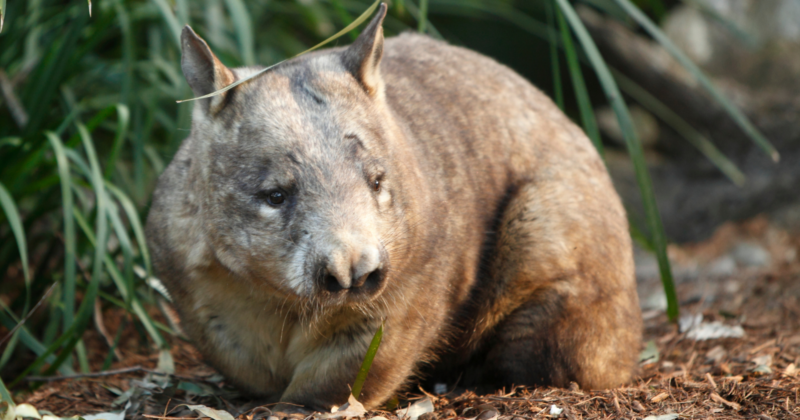
1. The northern hairy-nosed wombat
Down to about 315 individuals, all living in two small Queensland locations. I remember seeing common wombats as a kid on the property, their sturdy bodies trundling across paddocks at dusk. The northern hairy-nosed variety is larger, softer-furred, and running out of time. They need specific soil types for their burrows, specific grasses to eat. When your world shrinks to two patches of land, every drought, every disease, every disturbance could be the last.
What strikes me isn’t just the small number left, but how specific their needs are. It reminds me of patients I’ve nursed with rare conditions – everything has to be just right for survival.
2. The orange-bellied parrot
Some winters, there are fewer than 50 of these small, bright parrots left in the wild. They migrate between Tasmania and mainland Australia, a journey that gets more perilous each year as their coastal salt marsh habitat disappears to development.
I think about them when I walk the coastal track with Biscuit in the afternoons. The path used to wind through native coastal vegetation. Now half of it borders new housing estates with their neat lawns and not a native plant in sight. These parrots need specific plants for food and nesting. We’ve replaced their pantry and nursery with suburban sprawl.
3. The Gilbert’s potoroo
Australia’s most endangered marsupial, with only about 100 left. They’re truffle-eaters, these tiny creatures, dependent on underground fungi that grow in specific forest conditions. Imagine your entire species surviving in an area smaller than some farms.
I’ve turned my small backyard into a habitat for native creatures, planting local species and leaving leaf litter for insects and small lizards. But Gilbert’s potoroo needs old-growth forest with its complex underground networks. You can’t recreate that in a suburban garden. Some things, once gone, don’t come back.
4. The Christmas Island forest skink
This one haunts me. The last known wild individual was captured in 2014 for a captive breeding program. Now only a captive population remains, if it still exists at all. An entire species that evolved over millions of years, gone from the wild in my lifetime.
During my night shifts in aged care, I sometimes think about last things. The last time someone walked independently. The last time they recognised their daughter. There’s something unbearably sad about witnessing endings, whether it’s a person’s independence or a species’ existence in the wild.
5. The great hammerhead shark
Critically endangered in Australian waters. These ancient predators, with their distinctive hammer-shaped heads that help them hunt, are disappearing due to fishing pressure and habitat loss.
My grandson and I explore the rock pools at low tide, looking for small fish and crabs. I teach him what my father taught me – to look carefully, touch gently, leave everything as you found it. But I wonder what will be left for him to show his children. The ocean that seemed infinite when I was young now feels frighteningly fragile.
6. The spotted-tail quoll
Our largest carnivorous marsupial on the mainland is vanishing. They need large territories, connected forest corridors, prey to hunt. Everything we’re not providing as we fragment the landscape with roads and clear-cuts.
The lorikeets that visit my deck each evening follow specific flight paths between feeding trees. Break those paths with development, remove the trees, and the birds disappear. It’s the same for quolls, just on a larger scale. Prof John Woinarski doesn’t mince words: “We have no excuses for not saving these species. We know which species they are, where they occur and what threatens them.”
7. The Leadbeater’s possum
Victoria’s faunal emblem, down to maybe 1,500 individuals. They need old trees with hollows for nesting – trees that take 150 years to develop those hollows. We’re logging them faster than they can grow.
After my divorce, I spent a lot of time walking in bushland, trying to make sense of things. The old mountain ash forests where Leadbeater’s possums live have that cathedral quality that makes you quiet inside. We’re not just losing animals; we’re losing the places that restore us.
Why this matters more than we think
Forty-four years of nursing has taught me that everything’s connected in ways we don’t always see until something breaks. Remove one element from a system and watch the cascade of consequences. It’s true in human health and it’s true in ecosystems.
Research from Nature Reviews Biodiversity found that wildlife provides vital, often overlooked contributions to human wellbeing – from pollination to pest control to mental health benefits. We’re not separate from nature; we’re part of it.
The quiet morning visits from my kookaburra, the blue-tongue lizard warming on the path, the sugar gliders that used to glide between trees at dusk – these aren’t just nice additions to suburban life. They’re indicators of ecosystem health. When they disappear, it’s a warning.
Conclusion
That silent kookaburra on my fence post started laughing again this morning. Turns out his mate had been sitting on eggs in a hollow two gardens over. Sometimes there are small victories.
But we can’t rely on luck. Living alongside wildlife for decades has taught me that coexistence isn’t passive. It requires choices – what we plant, what we protect, what we’re willing to sacrifice for something beyond ourselves.
At 63, I think about what we’re leaving behind. Not just for my grandson, but for all the grandchildren who’ll inherit this thinning world. The species we lose now are gone forever. No amount of regret brings them back.
The evening light’s coming through the eucalypts as I write this. The lorikeets are arriving for their evening congregation, noisy and demanding as always. This ordinary moment is built on millions of years of evolution, and we’re unraveling it in decades. That’s the real tragedy – not that we couldn’t save these species, but that we choose not to.
- 7 Australian animals on the brink of extinction — and what living alongside native wildlife for decades taught me about why it matters - April 20, 2026
- 7 morning habits of women in their 60s who look and feel a decade younger, none of them involve expensive products - April 18, 2026
- 10 modern hairstyles for thin hair that actually look effortlessly elegant, not like you’re trying to hide anything - April 17, 2026