

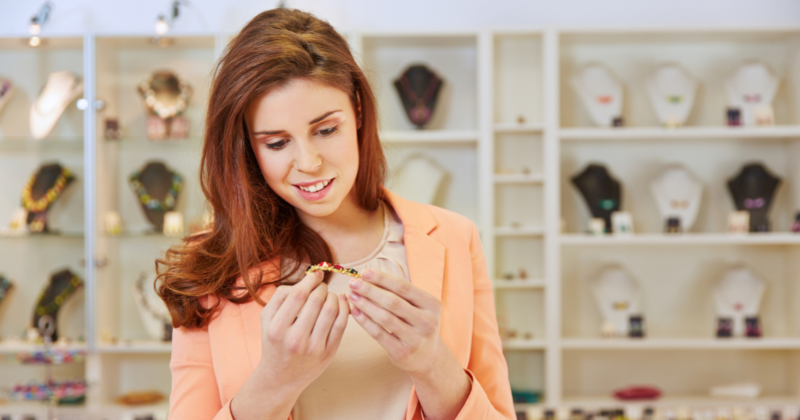
Last week, I stood in a jewelry store watching a woman examine a diamond ring while the salesperson rattled off certifications and mining practices.
She looked overwhelmed.
I get it.
The ethical jewelry movement has exploded, and suddenly everyone claims to be sustainable, responsible, or eco-friendly.
But here’s what most people miss: genuine ethical jewelry brands do more than slap a “sustainable” label on their products.
They rebuild the entire system from the ground up.
After spending years researching and investing in pieces that align with my values, I’ve discovered seven brands that actually walk their talk.
These aren’t just companies with good marketing.
They’re revolutionizing how jewelry gets made, sold, and valued.
1) Vrai: lab-grown diamonds without the compromise
Vrai grows their diamonds in a foundry powered entirely by renewable energy.
Not partially.
Entirely.
When I visited their showroom, what struck me wasn’t just the quality of the stones.
It was their complete transparency about the process.
They show you exactly where and how each diamond forms.
The carbon footprint.
The water usage.
Everything.
Their pieces cost about 30% less than mined diamonds of comparable quality, but that’s not even the main draw.
What sets them apart is their zero-emission production model and their commitment to creating heirloom-quality pieces that last generations.
2) Catbird: the brooklyn brand that redefined recycled gold
Catbird has been quietly revolutionizing ethical jewelry since before it was trendy.
Every single piece uses recycled gold or silver.
But they go further.
They manufacture everything in their Brooklyn studio, where workers earn living wages with benefits.
I’ve worn their threadbare ring for several years now.
It hasn’t tarnished, bent, or lost its shine.
The quality matches luxury brands at a fraction of the price.
What makes Catbird different is their radical transparency about pricing.
They break down exactly what you’re paying for: materials, labor, studio costs, and their margin.
No mysterious markups.
No inflated prices to create false exclusivity.
3) Brilliant Earth: traceability that actually means something
Most brands claim ethical sourcing.
Brilliant Earth provides blockchain documentation.
You can trace your stone from mine to finger.
They work directly with mining communities, ensuring fair wages and safe conditions.
But what really distinguishes them is their giveback program.
They donate 5% of profits to communities impacted by mining.
Not revenue.
Profits.
That’s a significant commitment that directly improves lives in Sierra Leone, Congo, and other mining regions.
Their pieces range from accessible to luxury, but every tier maintains the same ethical standards.
4) Mejuri: democratizing fine jewelry ethically
Mejuri disrupted the industry by eliminating traditional retail markups while maintaining ethical production.
They work with manufacturers who provide:
• Fair wages and safe working conditions
• Healthcare benefits for all employees
• Skills training and advancement opportunities
• Regular third-party audits to ensure compliance
Their direct-to-consumer model means you’re not paying for expensive storefronts or middlemen.
Just quality pieces at honest prices.
I appreciate how they’ve normalized buying jewelry for yourself rather than waiting for someone else to gift it.
That shift in mindset, combined with ethical practices, makes luxury accessible without exploitation.
5) AUrate: zero waste, maximum impact
AUrate achieved something remarkable: completely zero-waste production.
Every gold shaving gets melted down and reused.
Every gemstone cutting becomes part of another piece.
Nothing goes to landfill.
They also pioneered the book smart scholarship program, funding education for young women with every purchase.
Not a percentage of profits.
Every single purchase contributes.
The jewelry itself feels substantial.
Weighty.
Like pieces meant to be worn daily for decades, not seasonal trends to be discarded.
Their pricing reflects the true cost of ethical production without the artificial inflation common in luxury jewelry.
6) Pippa Small: preserving traditional craftsmanship
Pippa Small works directly with artisan communities in Afghanistan, Myanmar, and Jordan.
Not through intermediaries.
Direct partnerships.
This means artisans receive fair payment for their skills while preserving traditional techniques at risk of disappearing.
Each piece tells a story of cultural heritage and individual craftsmanship.
The slight irregularities that come with handmade jewelry become features, not flaws.
What makes them genuinely different is their commitment to working in conflict zones and marginalized communities.
They provide stable income in unstable regions, offering dignity through skilled work rather than charity.
7) Soko: technology meets tradition in kenya
Soko uses mobile technology to connect Kenyan artisans directly with global markets.
No exploitative middlemen.
No markup chains.
Just skilled craftspeople earning fair wages for their work.
They’ve created an entire ecosystem that provides consistent income to over 2,000 artisans.
The designs blend contemporary aesthetics with traditional African techniques.
Each piece comes with the artisan’s story, creating a genuine connection between maker and wearer.
Their prices reflect the true cost of ethical production: fair wages, quality materials, and sustainable practices.
Not inflated luxury pricing.
Final thoughts
These seven brands prove that ethical jewelry doesn’t mean compromising on quality, beauty, or value.
They’ve each found unique ways to address different aspects of the industry’s problems.
Some focus on materials.
Others on labor practices.
Several tackle both while adding community development or education initiatives.
I’ve gradually replaced most of my jewelry collection with pieces from these brands.
Not because I needed new jewelry, but because wearing something aligned with my values feels different.
Each piece becomes a small vote for the world I want to see.
The real difference between these brands and the rest isn’t just their practices.
It’s their transparency, their consistency, and their willingness to rebuild an entire industry rather than just polish its surface.
When you invest in genuinely ethical jewelry, you’re not just buying an accessory.
You’re supporting a revolution in how beautiful things get made.
What matters most to you when choosing jewelry: the story behind it, the materials used, or the impact of your purchase?

- Why I stopped buying conventional cleaning products entirely: the 6 simple natural alternatives I now make at home - April 19, 2026
- The curly hair routine I finally stopped overcomplicating (and the 7 clean products that made all the difference) - April 19, 2026
- How to wear a turban the right way: why this one sustainable accessory is the most effortlessly chic thing in my wardrobe - April 18, 2026