

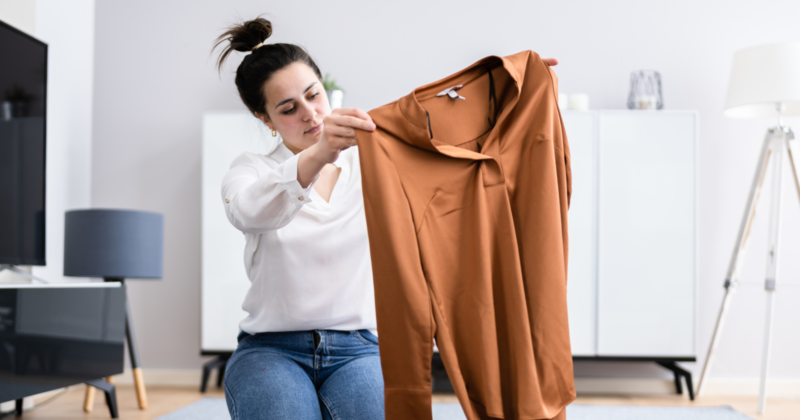
Last week, I stood in my friend’s walk-in closet as she showed me her latest haul of “sustainable” fashion pieces.
Each item came with a tag promising eco-friendly materials or carbon-neutral shipping.
Yet something felt off.
The closet was already packed with barely-worn clothes, and here were more items joining the collection.
That’s when I realized we’ve been thinking about sustainable fashion all wrong.
Real sustainability doesn’t come from buying new things with green labels.
The most honest approach sits right in our own closets, waiting to be transformed.
1) Why upcycling beats every other sustainable option
Most sustainable fashion still requires new production.
Even the most ethical brands need water, energy, and transportation to create and deliver their products.
Upcycling sidesteps this entire system.
No marketing spin.
No hidden supply chains.
No questionable certifications.
Just you, working with what already exists.
When I transformed my husband David’s old dress shirts into a structured tote bag last year, I knew exactly where the materials came from.
I controlled every step of the process.
That level of transparency simply doesn’t exist when you’re buying new, no matter how many sustainability promises come with it.
2) Start with simple alterations that make a difference
The easiest way to begin upcycling is by adjusting fit.
Most pieces in our closets go unworn because something feels slightly off.
Take in the waist of that oversized blazer.
Shorten those palazzo pants to a length that actually flatters you.
Replace dated buttons with modern alternatives.
These small changes completely shift how a garment looks and feels.
I learned this after moving toward minimalism in my early thirties.
Instead of buying new pieces when trends shifted, I started tweaking what I already owned.
A simple hem adjustment turned an awkward midi skirt into a chic mini.
Removing shoulder pads from vintage blazers brought them into this decade.
3) Master the art of strategic cutting
Cutting seems scary, but done right, it transforms pieces entirely.
Turn long sleeves into three-quarter length.
Convert a maxi dress into a midi.
Transform wide-leg jeans into straight-leg ones.
The key is measuring twice and cutting once.
Mark your cutting lines with chalk first.
Try the piece on with safety pins holding the new shape.
Only cut when you’re completely sure.
This approach saved me from countless shopping trips.
That formal dress gathering dust became my go-to summer midi after removing the bottom tier.
4) Layer and combine unexpected pieces
Upcycling doesn’t always mean altering individual items.
Sometimes the magic happens when you combine pieces in new ways.
Sew a silk scarf onto the hem of a plain dress.
Attach lace from an old camisole to the cuffs of a denim jacket.
Layer a mesh top under a sundress to create an entirely different look.
These combinations create one-of-a-kind pieces without looking homemade.
The trick is choosing materials with similar weights and care requirements.
5) Focus on high-impact details
Professional-looking upcycling often comes down to details.
• Replace plastic buttons with vintage metal ones
• Add contrast piping to pocket edges
• Switch out drawstrings for leather cords
• Install better quality zippers
• Add interior pockets to jackets
These small upgrades elevate the entire piece.
They’re also relatively simple to execute, even for beginners.
Quality hardware instantly makes any garment look more expensive and intentional.
6) Learn basic visible mending techniques
Visible mending turns flaws into features.
Instead of hiding repairs, you celebrate them.
Sashiko stitching adds geometric patterns to worn denim.
Decorative darning creates colorful patches on knitwear.
Embroidery covers stains while adding personality.
These techniques come from various cultural traditions where mending was an art form, not a chore.
The Japanese concept of wabi-sabi finds beauty in imperfection.
Your mended pieces tell a story that new clothes never could.
7) Dye strategically to unify or refresh
Dyeing can rescue faded pieces or create cohesive looks from mismatched items.
Start with natural fiber pieces for best results.
Choose colors slightly darker than the original for even coverage.
Consider tie-dye or dip-dye techniques for pieces with stubborn stains.
The transformation can be dramatic.
I turned three different white shirts with various stains into a matching set of dusty blue pieces.
They now form the foundation of my summer wardrobe.
8) Know when to seek professional help
Some upcycling projects benefit from professional expertise.
Tailors can handle complex alterations you’re not ready for.
Cobblers can transform shoes and bags.
Embroiderers can add intricate details.
This isn’t cheating.
Working with professionals still keeps existing pieces out of landfills while supporting local craftspeople.
The cost usually equals what you’d spend on new items, but you end up with perfectly fitted, unique pieces.
Final thoughts
Upcycling challenges everything the fashion industry wants us to believe.
We don’t need constant newness.
We don’t need perfect products.
We need creativity, intention, and the willingness to see potential in what we already own.
Every time you transform something instead of buying new, you’re making a radical statement.
You’re saying that your creativity matters more than trends.
That your skills are more valuable than convenience.
That real style comes from working with what you have, not endlessly acquiring more.
What piece in your closet deserves a second chance?

- Why fashion upcycling is the most honest form of sustainable style (and the 8 ways to do it without it looking like a craft project) - April 30, 2026
- The loneliest part of eating vegan isn’t the food: it’s these 6 social situations that nobody warns you about - April 29, 2026
- Raising a vegan baby in a non-vegan world: the recipes, the challenges, and the small wins that make it worth it - April 29, 2026