

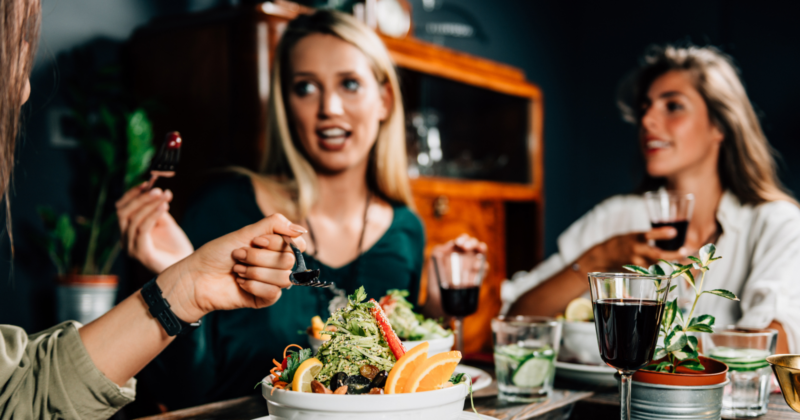
Last month, I stood in my close friend’s kitchen watching her prepare dinner for eight people.
She’d made roasted chicken, creamy mashed potatoes, and green beans sautéed in butter.
For me, she’d set aside a small bowl of plain quinoa and steamed broccoli.
The gesture was kind, but as everyone else passed dishes around the table, sharing and commenting on the food, I ate my separate meal in what felt like a bubble of isolation.
The food itself wasn’t the problem.
The loneliness came from suddenly being outside the shared experience, marked as different in a way that shifted the entire dynamic of the evening.
When I first adopted a plant-based diet several years ago, I thought the hardest part would be giving up cheese or finding protein sources.
Nobody told me the real challenge would be navigating the social minefields that come with this choice.
1) The defensive reactions when you haven’t said a word
You’re at a work lunch, quietly ordering the vegetable stir-fry without the egg.
Suddenly, your colleague launches into a speech about how they could never give up meat, how humans are meant to eat animals, and how their uncle’s farm treats cows really well.
You haven’t mentioned your dietary choices.
You haven’t commented on their food choices.
Yet somehow, your mere existence as someone who doesn’t eat animal products has triggered a ten-minute monologue about why they eat meat.
This happens more often than you’d think.
People see your food choices as a judgment on theirs, even when you’re just trying to eat your lunch in peace.
The exhausting part isn’t defending your choices.
The exhausting part is constantly reassuring others that you’re not judging theirs.
2) Family gatherings where food equals love
David’s mother spent three days making her famous lasagna for his birthday dinner.
When I brought my own meal, her face fell.
“I could have made something special for you,” she said, hurt evident in her voice.
Family gatherings are particularly challenging because food carries so much emotional weight.
Refusing grandmother’s pie isn’t just about the pie.
In many families, sharing specific dishes is how love is expressed and received.
When you can’t participate in these food rituals, you’re suddenly outside the circle of belonging.
The conversation shifts.
Instead of talking about life updates or sharing memories, you’re explaining your dietary choices for the hundredth time.
You become the center of attention for all the wrong reasons.
3) Dating and relationships before you find your rhythm
Before I met David, dating with dietary restrictions felt like adding an extra hurdle to an already complicated process.
First dates at restaurants became strategic operations.
You scan the menu online beforehand, hoping there’s more than just a sad side salad.
You wonder when to mention your dietary choices without making it seem like a bigger deal than it is.
Some people see it as high-maintenance.
Others immediately launch into debates about protein.
A few ghost you after learning you won’t share their favorite burger joint experience.
The loneliness here isn’t just about food compatibility.
You start wondering if you’ll have to choose between your values and companionship.
Will you always be the complicated one?
4) Work events where food is the main social glue
The company orders pizza for the team meeting.
Everyone grabs slices while discussing the quarterly reports.
You sit with your prepared lunch, physically present but somehow separate from the communal experience.
Office celebrations, client dinners, networking events.
Food is the social lubricant in professional settings.
When you can’t fully participate, you miss out on more than just the meal.
• You skip the bonding that happens over shared appetizers
• You become the person who “makes things complicated” when organizing team lunches
• You miss casual conversations that happen around the coffee machine about the new bakery downtown
• You find yourself eating alone more often because it’s easier than explaining
These might seem like small moments, but they add up.
Professional relationships often build through these informal interactions.
5) Travel and cultural experiences that revolve around local cuisine
Traveling to Lisbon, I watched other tourists delight in traditional seafood restaurants.
Meanwhile, I navigated language barriers trying to explain my dietary needs.
Travel is supposed to broaden your horizons through new experiences.
Food is a massive part of cultural exploration.
When you have dietary restrictions, you sometimes feel like you’re experiencing places through a window rather than fully immersing yourself.
Local hosts feel rejected when you can’t try their traditional dishes.
Fellow travelers bond over meals you can’t share.
You spend energy researching restaurants instead of just wandering and discovering.
The spontaneity that makes travel magical becomes limited.
6) Old friendships that don’t evolve with your choices
Some friendships are built around shared meals.
Saturday brunch at the usual spot.
Monthly dinner at that steakhouse everyone loves.
When you change your diet, these rituals become complicated.
Some friends adapt easily, suggesting new places or cooking plant-based meals when you visit.
Others see it as a personal affront or an inconvenience they didn’t sign up for.
The friendship either evolves or slowly fades.
During my divorce, I lost friends who chose sides.
Later, I lost different friends who couldn’t adapt to my food choices.
Both losses hurt, but the second felt more surprising.
These weren’t major value differences or life-changing events.
Just food.
Yet it was enough to shift dynamics beyond repair.
Final thoughts
The social challenges of plant-based eating have taught me something valuable about belonging.
Real connection isn’t about everyone eating the same thing or following the same lifestyle.
The friends who matter will suggest restaurants with good plant-based options without making it seem like a burden.
The family members who love you will learn to show care in ways beyond traditional food sharing.
The partner who’s right for you will see your choices as part of who you are, not an inconvenience to work around.
David and I cook simple plant-based meals together most evenings.
This shared practice has become its own form of mindfulness, a rhythm we’ve created that works for us.
The loneliness I sometimes feel in social situations has pushed me to be more intentional about my relationships.
Quality over quantity.
Depth over convenience.
If your food choices are creating social isolation, remember that the discomfort is often temporary.
People adjust, dynamics shift, and you find your tribe.
The ones who stay are the ones who see you, not just your dietary preferences.
What matters most is staying true to your values while remaining open and compassionate with others who choose differently.

- The loneliest part of eating vegan isn’t the food: it’s these 6 social situations that nobody warns you about - April 29, 2026
- Raising a vegan baby in a non-vegan world: the recipes, the challenges, and the small wins that make it worth it - April 29, 2026
- Why the most beautiful living rooms are never the most cluttered ones: the 7 conscious purchases that genuinely transform a space - April 29, 2026