

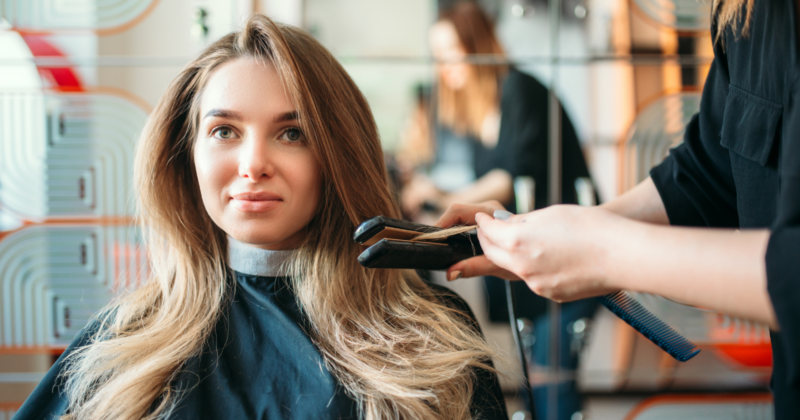
The hairdresser kept suggesting layers to “add volume” and I kept thinking about how my patients used to do the same thing with their medications – take more of something that wasn’t working in the first place. Thin hair doesn’t need to be disguised. It needs the right cut, the right approach, and honestly, the right attitude.
After spending the better part of my sixties figuring out what actually works for hair that’s gotten progressively finer, I’ve learned that most advice for thin hair is backwards. We’re told to tease it, spray it, layer it into submission. But the styles that actually look elegant are the ones that work with what you’ve got, not against it.
1. The blunt bob that changed everything
Three years ago, I walked into a salon in Bondi and asked for all my layers to be cut off. The stylist looked horrified. She kept saying layers create movement, layers create volume. But layers on thin hair create wisps. What I wanted was weight, structure, something that moved as one piece instead of flying off in different directions.
That blunt bob at collarbone length transformed my mornings. No more trying to corral different lengths into cooperation. The ends looked thick because they were all cut at the same point. When the ocean breeze caught it after my morning swim, it fell back into place instead of tangling into chaos.
2. Why the French bob works when nothing else does
Shorter than a traditional bob, hitting just at the jawline, this cut removes all the straggly ends that thin hair tends to develop. The key is keeping it absolutely straight across, no graduation, no layers sneaking in. Add a fringe that sits just above the eyebrows and suddenly you’ve got Parisian chic instead of trying-too-hard.
My hairdresser now cuts mine dry, which seemed wrong at first but makes perfect sense. You see exactly where each piece falls, how much weight you’re keeping, where the natural movement is. Wet cutting on thin hair is like trying to hem curtains while they’re bunched up.
3. The pixie cut nobody expects
Women always tell me they can’t do short because their hair is too thin. But a proper pixie cut, slightly longer on top with clean edges around the ears and neck, gives thin hair nowhere to hide its strengths. You’re not trying to create volume over a large area. You’re working with a smaller canvas.
The trick is keeping the sides and back neat while leaving enough length on top to style forward or to the side. Think Mia Farrow, not military recruit. Use a tiny amount of pomade, not mousse or volumizing spray. You want control and shine, not height.
4. The long bob that actually works
Sitting right at shoulder length, cut absolutely straight, this is the sweet spot for thin hair that wants some length. The weight pulls it smooth without dragging it completely flat. Add a side part, tuck one side behind your ear, and you’ve got an editorial look without trying.
What matters here is maintenance. The moment it grows past your shoulders, thin hair starts looking stringy. Book your trim every six weeks, not every three months. Consider it like checking blood pressure – regular monitoring prevents bigger problems.
5. The unexpected power of the shag
Not the 1970s disaster you’re picturing. The modern shag for thin hair is subtle – a bit of texture through the crown, slightly shorter layers around the face, but keeping length through the back. It’s the difference between looking undone and looking disheveled.
The bangs make this cut. Not thin, wispy bangs that separate into strings by lunchtime, but a solid fringe cut just below the eyebrows. It frames everything else and gives the illusion of thickness where it counts most – around your face.
6. Why texture beats volume every time
Thin hair trying to be big hair looks like desperation. But thin hair with deliberate texture looks intentional. A razor cut that creates slight separation, a point-cut that removes bulk from the ends while keeping them full-looking, these techniques work because they’re not fighting physics.
My grandson asked me why my hair looked “fancy” after my last cut. Seven-year-old honesty is brutal and accurate. It looked fancy because it looked intentional, not like I was trying to hide something.
7. The side-swept solution
Deep side parts work magic on thin hair. They create automatic volume at the roots without teasing, and they make any cut look more polished. Sweep everything to one side, secure with a bobby pin behind one ear if needed, and you’ve got instant elegance.
The key is committing to the part. Not a little bit to the side, but dramatically so. Think old Hollywood, not office appropriate. Thin hair needs bold decisions, not tentative ones.
8. The truth about bangs
Full, straight-across bangs work brilliantly for thin hair because they concentrate your hair where it has the most impact. Not thin, separated bangs that show scalp, but a proper fringe that starts further back on your crown. Yes, you’re using more hair for the bangs. Yes, it’s worth it.
Side-swept bangs work too, but they need to be heavy enough to stay put. Wispy bangs on thin hair are like tissue paper in rain – they don’t survive contact with reality.
9. Embracing your actual texture
If your thin hair has a wave, let it wave. If it’s straight, let it be straight. The moment you start fighting your natural texture while also dealing with thinness, you’ve lost the battle. Work with what grows out of your head, not against it.
I spent years trying to curl my straight, thin hair into submission. Now I blow dry it smooth, add a bit of shine serum, and walk out the door. The elegance comes from the health and shine, not from complicated styling.
10. The styles that always fail
Long layers on thin hair look like a bad 1980s music video. Complicated updos fall apart within an hour. Perms damage already fragile hair into breaking. Excessive highlights create more damage than dimension. These aren’t opinions – they’re observations from decades of trying and failing.
What actually creates elegance
Regular trims every six weeks. A cut that suits your face shape, not the shape you wish you had. Products that add shine and control, not volume and hold. Accepting that thin hair can be beautiful when it’s healthy, well-cut, and styled simply.
The morning after I got my first truly good haircut for thin hair, I went for my usual ocean swim. When I came out, my hair dried into its shape without any help from me. That’s when I knew I’d found it – not a disguise, but a style that worked with what I had.
The truth about thin hair is that it doesn’t need to be hidden or apologised for. It needs the right cut, regular maintenance, and the confidence that comes from knowing you’re not trying to be something you’re not. Whether you choose a pixie, a bob, or something in between, the elegance comes from the decision to work with your hair, not against it. Stop hiding. Start choosing cuts that celebrate what you’ve got.

- 10 modern hairstyles for thin hair that actually look effortlessly elegant, not like you’re trying to hide anything - April 17, 2026
- 9 eco-friendly adventures in Sydney that most locals haven’t tried (and why slowing down is the best way to finally see the city properly) - April 17, 2026
- 5 ethical clothing brands built for women who spend serious time outdoors — and don’t want to compromise on sustainability to do it - April 16, 2026