

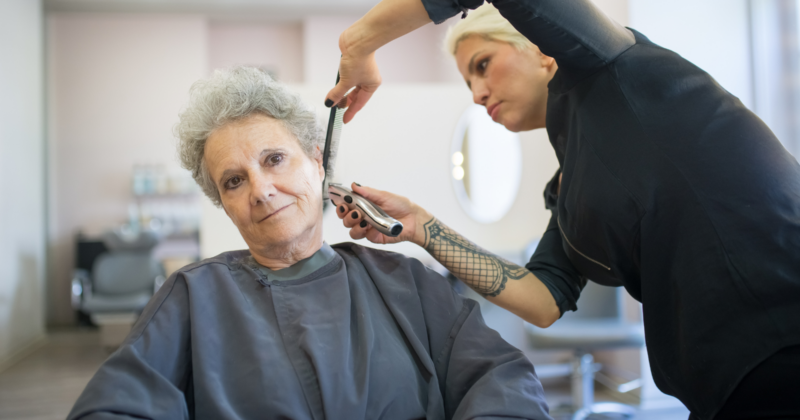
Last week at the chemist, a woman stopped me to ask about my hair. Not in that pitying way people used to, where they’d trail off mid-sentence when they noticed how thin it was getting. She wanted to know what I’d done differently. “It looks so healthy,” she said. I nearly laughed. My hair hasn’t been healthy since menopause started its slow dismantling project fifteen years ago.
What changed wasn’t my hair. It was everything else: how I wash it, what I put in it, how I think about it. Mostly that last one.
The great hair betrayal nobody warns you about
They prepare you for hot flashes and mood swings. Nobody mentions that your hair might gradually transform into something you don’t recognize. Mine started thinning at 48, right around when I began swimming in the ocean three mornings a week. For years, I blamed the salt water. Then I blamed my shampoo. Then genetics. Then stress from the divorce.
The truth was simpler and more complicated: hormones. Dropping estrogen levels meant my hair follicles were essentially going into early retirement while I was still showing up for night shifts. The texture changed too. What used to be thick and slightly wavy became wispy and unpredictable, like it couldn’t decide what it wanted to be when it grew up.
I spent a fortune on volumizing products that left my scalp itchy and my hair looking like I’d styled it with furniture polish. Those root-lifting sprays? They lifted for about twenty minutes before everything collapsed like a failed soufflé. The worst part was catching my reflection in hospital bathroom mirrors under those unforgiving fluorescent lights. I looked tired in a way that had nothing to do with working doubles.
Why everything you learned about hair care is probably wrong now
Here’s what I wish someone had told me: thin hair in your 60s needs the opposite of what you think it needs. Less washing, not more. Fewer products, not the arsenal I’d accumulated. Gentler handling, like you’re dealing with vintage silk instead of sturdy cotton.
I discovered this by accident when I got sick with flu three winters ago and couldn’t wash my hair for five days. When I finally made it to the shower, expecting a disaster, my hair actually looked better. Fuller, somehow. Less stringy. That’s when I started questioning everything.
Turns out, overwashing strips natural oils that thin hair desperately needs. All those clarifying shampoos I’d been using to get rid of product buildup? They were making everything worse. My scalp was overproducing oil to compensate, which made my hair look limp, which made me wash it more. A perfect circle of self-sabotage.
The sulfates in regular shampoos are particularly brutal on aging hair. They’re the same ingredients that make dish soap cut through grease. Fine for plates, terrible for follicles that are already struggling. Same with hot water. I’d been essentially cooking what little hair I had left.
The clean beauty revelation that actually made sense
I stumbled into clean beauty products the way I stumble into most things: skeptically and slightly annoyed. My daughter had left some sulfate-free shampoo at my place, one of those bottles that looked like it belonged in a wellness retreat rather than my bathroom. The ingredients list read like a salad: coconut, argan oil, rosemary extract.
But here’s the thing about working in healthcare for four decades: you learn to pay attention to what actually works versus what’s supposed to work. After two weeks of using that overpriced bottle, my scalp stopped itching. After a month, the baby hairs around my hairline looked less like fuzz and more like actual hair.
Clean beauty for hair isn’t about being trendy. It’s about removing the harsh chemicals that thin, aging hair can’t handle anymore. No sulfates, no parabens, no synthetic fragrances that irritate sensitive scalps. Instead, ingredients that actually nourish: natural oils that don’t weigh hair down, proteins that strengthen without building up, botanical extracts that stimulate circulation.
I now use a cleansing conditioner twice a week. Not shampoo, not regular conditioner, but something in between that cleans without stripping. On other days, I just rinse with cool water and massage my scalp. My grandson thinks it’s hilarious that Nana barely uses shampoo. “But how does it get clean?” he asks. Chemistry, I tell him. Natural oils dissolve dirt better than detergent sometimes.
The styling approach that makes thin hair look deliberate
The biggest shift happened when I stopped trying to make my hair look thick. Sounds counterintuitive, but fighting against what your hair wants to do is exhausting and usually obvious. Instead, I learned to work with the thinness, make it look intentional rather than unfortunate.
I cut it shorter. Not grandmother short, but collar-bone length with long layers that move. Thin hair looks thinner the longer it gets, like it’s being stretched too far. A good cut every six weeks matters more now than any product.
For styling, less is everything. A pea-sized amount of leave-in treatment on damp hair, concentrated on the ends. A tiny bit of texturizing cream worked through with fingers, not a brush. Then I let it air dry mostly, using a diffuser on cool for the last bit if I need to speed things up. No round brushing, no hot tools except for special occasions.
The texture cream was a game-changer. Not mousse, which makes thin hair crispy, or gel, which makes it helmet-like. This stuff gives hair memory and movement without weight. It’s like the difference between starched sheets and softly rumpled linen. Both have their place, but one looks a lot more natural.
What “looking intentional” actually means
My hair will never look like it did at 35. Accepting that took longer than my divorce. But intentional isn’t about perfection. It’s about looking like you meant to look this way, like you’re not apologizing for your appearance or trying to hide something.
Some mornings after swimming, I let the salt water do its thing and my hair dries into these perfectly imperfect waves. Other days, I smooth it back with a bit of oil and clip it low. Both looks work because they’re deliberate, chosen, not desperate attempts to create volume that isn’t there.
I’ve noticed something interesting: when you stop obsessing about hiding thinness, people stop noticing it as much. Or maybe they notice but it doesn’t register as a flaw because you’re not treating it like one. It’s just your hair, the way having brown eyes is just your eyes.
Moving forward with what you’ve got
The woman in the chemist that day bought the same cleansing conditioner I use. She texted me a week later to say her husband noticed something different about her hair. “He couldn’t put his finger on it,” she wrote. “Just said I looked more like myself.”
That’s it, really. Looking more like yourself, not less. Using products that support what’s happening naturally rather than fighting against it. Understanding that healthy at 63 looks different from healthy at 33, and that’s not a failure, it’s just time passing.
My hair routine now takes fifteen minutes total. I spend less on products than I did during my volumizing phase, though what I buy costs more per bottle. The math works out. So does everything else, finally. My hair might be thin, but it’s soft, it moves, and it smells like rosemary instead of laboratory flowers.
Most importantly, I don’t think about it much anymore. There’s freedom in that, in letting something just be what it is. After decades of fighting battles I couldn’t win, choosing the right ones feels revolutionary. Even if it’s just about hair.

- 5 ethical clothing brands built for women who spend serious time outdoors — and don’t want to compromise on sustainability to do it - April 16, 2026
- What nobody tells you about styling thin hair in your 60s — and the clean beauty approach that finally made mine look intentional - April 16, 2026
- 9 things women over 60 quietly swap for better quality — and why conscious dressing gets more rewarding, not more restrictive, with age - April 14, 2026