


The lump in Margaret’s breast had been there for eight months. She told me this while I was checking her vitals before her mastectomy, speaking in that flat voice people use when they’re past being angry at themselves.
Eight months of knowing something was wrong. Eight months of school runs and work deadlines and her mother’s hip replacement and her husband’s job stress. Eight months of everyone else coming first.
I’ve lost count of how many times I’ve heard some version of this story.
The woman with chest pains who waited until after her daughter’s wedding. The one with severe abdominal pain who pushed through because it was tax season and her husband needed help with the business. The mother who ignored bleeding for six months because her son was going through a divorce and needed her support.
After 44 years in nursing, starting as a trainee in regional New South Wales when I was 19, I’ve seen this pattern play out hundreds of times. Women coming in with advanced conditions that could have been caught early, treated simply, managed better. All because somewhere along the way, they learned that their pain matters less than someone else’s convenience.
The training starts early
Watch any family gathering and you’ll see it. The women making sure everyone’s fed, comfortable, happy. The men sitting down. Not because they’re bad people, but because this is the script we’ve all learned. The one where women anticipate needs and men wait to be asked.
I did it for years. Through my marriage, I was the one who remembered birthdays, organised holidays, knew which child needed new school shoes. Even after twelve-hour shifts at the hospital, I’d come home and start my second shift without thinking about it. My exhaustion was just background noise.
The divorce at 36 taught me something, though it took me years to understand what. I’d spent so much time managing everyone else’s feelings about the separation that I never actually felt my own.
My daughters, Megan and Tess, needed stability. My ex-husband needed reassurance that I wasn’t the villain. Our friends needed to not pick sides. And somewhere in all that careful tending, I forgot that I was allowed to grieve too.
Bodies keep score
In my mid-40s, my body decided to have its say. Started with headaches that wouldn’t shift. Then my hands would shake during procedures. One morning, I couldn’t get out of bed. Not wouldn’t. Couldn’t.
My GP, a woman who’d seen her share of burned-out carers, sat me down and said something I’ll never forget: “Your body is smarter than you are. It’s pulling the emergency brake because you won’t.”
She was right. Years of putting myself last had caught up. The stress hormones, the disrupted sleep, the meals grabbed between tasks, the exercise I never had time for. My body had been sending signals for years. I’d just gotten very good at ignoring them.
The recovery wasn’t quick. Learning to prioritise my own health felt like speaking a foreign language. I’d schedule a walk and then cancel it because someone needed something. I’d book a check-up and reschedule it three times. The guilt was enormous. Who was I to take an hour for myself when there was always someone who needed that hour more?
The cost of being needed
Here’s what I’ve noticed working in home care these last few years. The women who end up needing the most intensive support are often the ones who gave the most. They’re the ones whose families say things like “Mum never complained” or “She was always so strong.”
Strong. We use that word like it’s a compliment, but sometimes it’s just another way of saying someone learned to carry too much.
I think about the woman I visited last month. Stage 3 ovarian cancer. She’d had symptoms for over a year but her grandson had special needs and her daughter was struggling and there was always a reason to push through one more day. When I asked her why she waited, she said, “There was never a good time.”
There’s never a good time when you’re the one holding everything together. The family machinery doesn’t run without you. But here’s the thing nobody tells you: it will have to learn.
Permission slips we never signed
Somewhere between childhood and here, we signed up for this idea that our needs come last. That a good woman is one who never asks for too much, never takes up too much space, never inconveniences anyone with her pain.
I see it in my own daughters sometimes, even though I’ve tried to raise them differently. Megan will work through a migraine rather than disappoint her team. Tess apologises when she cries. They’re both brilliant, capable women who still sometimes act like their feelings are an imposition.
Last year, I watched a young nurse ignore a back injury for weeks because we were short-staffed. When she finally went to get it checked, she needed surgery. Six weeks off work instead of maybe one if she’d gone earlier. The ward survived without her. It always does.
What changes when we stop
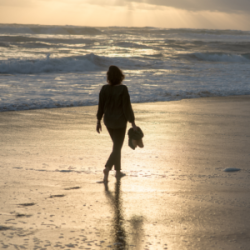
These days, I work two days a week. I swim in the ocean most mornings, even when it’s cold, especially when I don’t feel like it. I walk the coastal paths and don’t take my phone. I’ve learned that people-pleasing isn’t kindness, it’s fear dressed up as generosity. Fear that if we stop giving, we stop mattering.
But here’s what actually happens when you start putting yourself first: some people get upset. They’ve gotten used to you having no boundaries, and change makes them uncomfortable. That’s not your problem to solve.
Other things happen too. Your health improves. Your energy comes back. You start modelling something different for the young women in your life. You show them that their needs matter, not in theory but in practice.
Start before you’re ready
If you’re reading this with a pain you’ve been ignoring, a check-up you’ve been postponing, a rest you’ve been deferring, stop. Book the appointment now. Not after you finish the article. Now.
Your body is keeping track of every skipped meal, every late night spent solving someone else’s crisis, every signal you’ve ignored. It will collect, with interest.
The women I’ve watched leave things too late all had one thing in common: they thought they had more time. They thought they could get through one more busy period, one more family crisis, one more anything that seemed more urgent than their own wellbeing.
But bodies don’t wait for convenient times. Neither should you.
- What the Great Ocean Walk taught me about the difference between visiting nature and actually being in it - April 13, 2026
- Why the most environmentally responsible thing I ever did as a traveller was slow down, stay longer, and stop treating destinations like a checklist - April 13, 2026
- After 40 years of nursing I noticed the same pattern in almost every woman who came in for something serious — she had been quietly ignoring it for months because everyone else’s needs felt more urgent than her own - April 13, 2026