No single button, label or line of stitching proves a Barbour wax jacket is genuine, so the only sensible way to buy one second-hand is to run several checks and see whether they all agree.
A detailed public checklist comes from authorised Barbour retailer CHO, which describes itself as “Family Owned Since 1999” and “Official Stockists Of 40+ Brands”. Barbour’s own counterfeit page does something different: it tackles fake websites, not fake garments.
Six checks set out by authorised retailer CHO
CHO’s six-point guide runs from the hardware to the labels. Taken together, the points give a reasonable picture of a jacket before money changes hands.
- Learn the styles first. Barbour makes many jackets with their own names and distinctive designs, among them the classic Beaufort, the Border and the Bedale. CHO advises browsing the brand’s main website and cross-referencing any style you are offered against it.
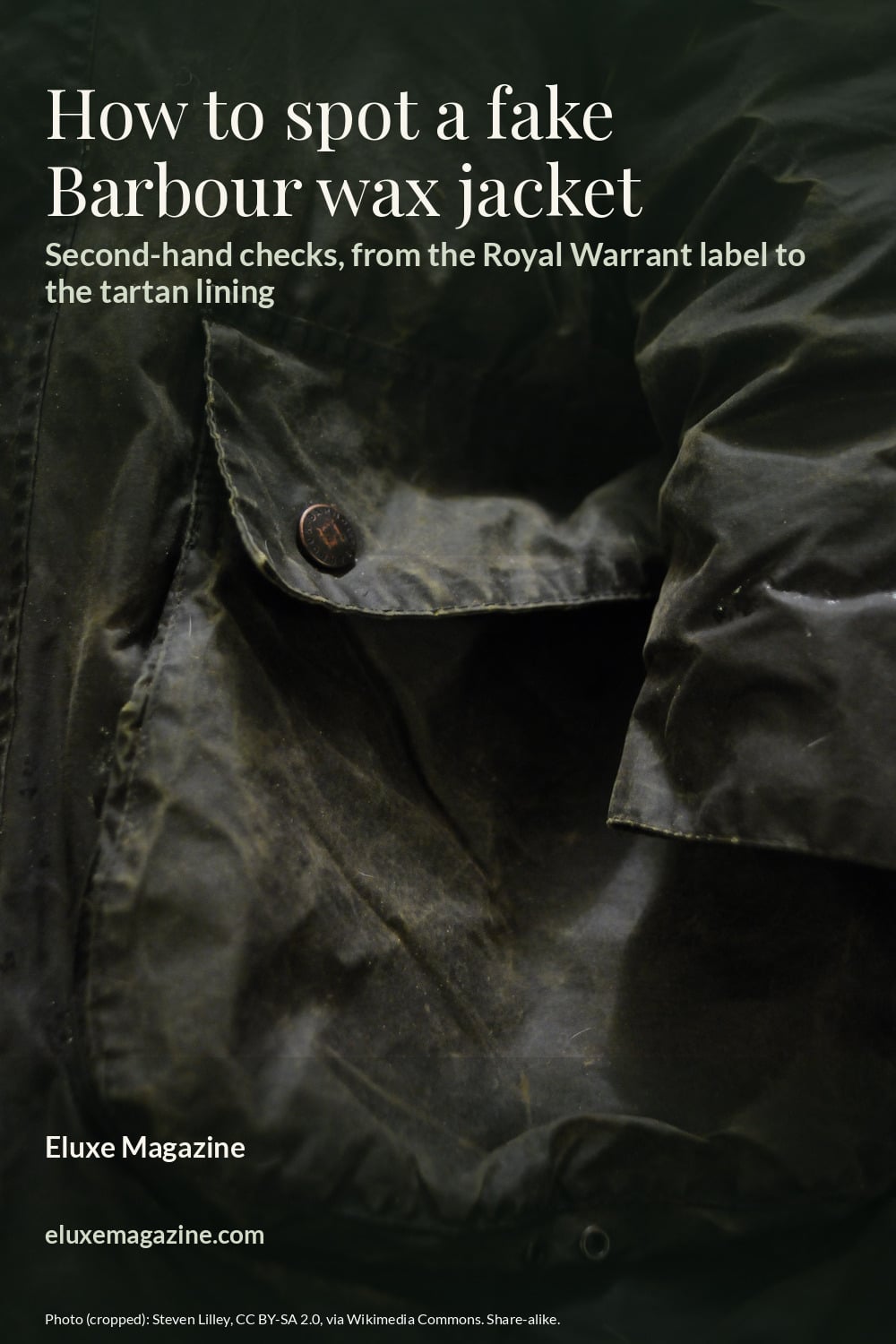
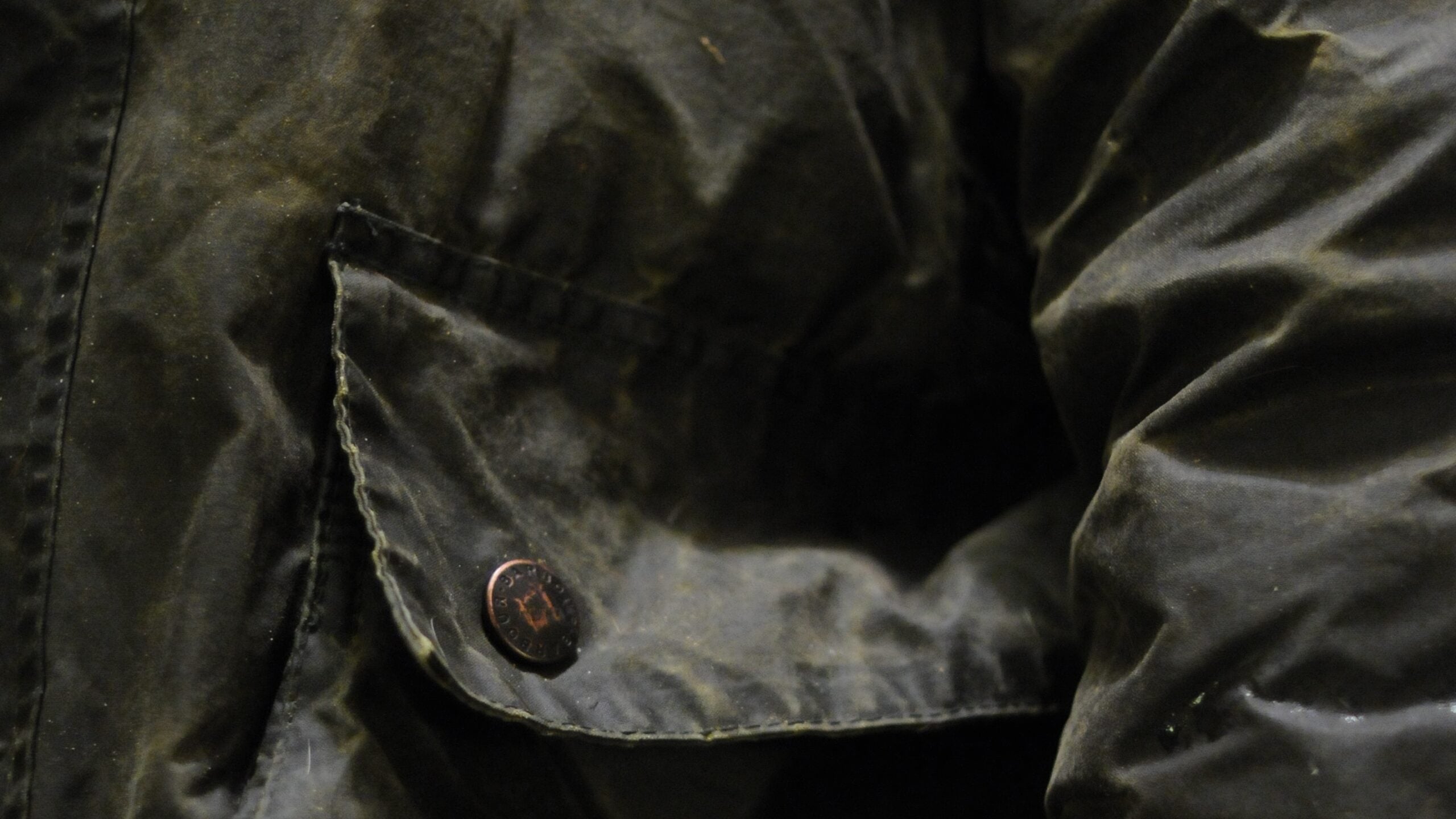
- Buttons. CHO says “The buttons of every Barbour jacket are always embossed with the Barbour name, regardless of style”, with the brand name “applied in a circular design around the edges of the buttons”. Look hard at spacing, font and spelling. Most counterfeiters “tend not to bother going into this level of detail, and those that do are likely to make small mistakes”, according to the retailer.
- Zips and metal detailing. CHO says zip pulls and other metal detailing on real jackets are embossed with the brand name too. “If a jacket has plain zippers with no brand name you can be sure it is a fake,” it says. Work the zip as well: a good one glides from top to bottom, while a cheap one is hard to pull and may stick.
- The inner label. It is “usually stitched into the lining under the collar” and always features the brand name. Older jackets, CHO says, will feature the Royal Warrant, which it describes as “three golden royal stamps printed above or next to the brand name”. The actual text may vary depending on the type of jacket. The label should also say ‘Made in England’ and the jacket size, and some name the style “along with an additional label identifying the Original Barbour Tartan”. A separate Barbour care label, “usually found stitched on the inner pocket”, is included on all genuine jackets, according to CHO.
- Brand stitching. Most styles, though not all, have the brand name stitched on or near the outer pockets. Check font, spacing, thread colour and stitching quality. The font should match the inner label, the colour should match the jacket, and the stitching should be even, with equal letter spacing and no loose threads.
- Faux fur. On jackets with faux-fur trim, CHO says genuine trim is thick, fluffy and a natural mixture of light and dark threads. Fake trim “will often feel rough to the touch, will appear thinner and less fluffy”.
The lining is worth checking against the maker’s own description of that specific style. Barbour’s product page for the Classic Bedale lists 6oz Sylkoil waxed cotton, “a 100% cotton lining in the Original Classic Tartan print”, branding to the left pocket, a two-way front zip, studs, moleskin-lined handwarmer pockets and a corduroy collar. On Barbour’s US site, the Classic Beaufort is described as having “a 100% cotton lining in Barbour’s iconic tartan print”, and the brand’s Beaufort guide calls “a signature tartan lining” part of the jacket’s heritage. The Beaufort was first available in 1983 and was designed by Dame Margaret Barbour.
Tartan is not universal, however. The Tartan Reimagined Modern Beaufort lists a polyester and cotton inner, so a lining that is not classic tartan does not by itself mean a jacket is fake. Compare it with the page for that exact model.
Why one detail never settles it, and what Barbour’s page actually covers
Each of CHO’s points is a sign, not a verdict. A convincing button can sit on a jacket with a wrong label, and a worn label can sit on a genuine coat that has had decades of use. Weigh the checks together, and treat anything that cannot be photographed clearly as unanswered.
Barbour’s Counterfeit Education page is built around a website lookup tool, headed “Check website URL”, and a form to “Submit a Suspicious Website”. It offers no garment-level checklist, so a seller who claims the brand endorses a particular physical test is going beyond what the page says.
The fake-shop problem is real enough. Outdoor and Country, another authorised retailer, says it has become aware of “a number of websites attempting to pass themselves off as legitimate Barbour retailers, including copies of our own website”. Those sites, it says, “either simply take customers money and do not supply any product or supply counterfeit items”. Barbour are working with UK and international authorities, according to the same retailer.
The same scepticism is worth carrying across other categories, as Eluxe’s guides to spotting a fake Hermès scarf and telling whether a vintage Louis Vuitton bag is fake set out. Ask a private seller for daylight photographs of the button edges, the zip pulls, the inner label under the collar and the care label in the pocket, plus whatever proof of purchase survives.
Buying second-hand, Re-loved and the re-waxing route
CHO’s own advice is to buy from a reputable retailer that deals directly with the brand, or direct from the brand. That removes most of the risk at a stroke, and it gives you a returns route if something is wrong. Anyone selling a jacket on rather than buying one can start with Eluxe’s list of places to sell old clothes online.
Barbour also runs its own second-life scheme. Re-loved, launched in 2019, lets customers in the UK hand in or post an old Barbour wax jacket and receive a voucher towards a new one, at participating stores or online during a promotional period and subject to the published terms.
The jackets handed in go to Barbour’s South Shields factory, where they are hand-restored and re-worked before being resold as one-of-a-kind Re-loved jackets. Barbour says these can be obtained by winning its social media competitions or by shopping its limited-edition drops on its website.
Repair is the other option for a tired jacket. Barbour’s Wax for Life re-waxing and repair service was first introduced in 1921, and the company says it re-waxes or repairs thousands of jackets a year. Barbour’s US Re-loved terms state that Re-Loved jackets are cleaned, repaired and reproofed and “sold as seen”, with the returns policy applying.