Two faux fur coats on UK high-street sites sit under £150 this winter, and they describe the same fibre in very different ways: a beige jacket at & Other Stories at £139, and the Florence coat at Hobbs, reduced to £109 from £189. One lists a recycled shell. The other lists a recycled lining in a product bullet, and nothing of the kind on the fur itself.
That gap is the whole exercise. Faux fur is a synthetic pile, and the fibre name on the label does not change between a recycled version and a virgin one. The difference shows up in a second panel, a percentage, or a single line of product copy.
Prices rechecked on 18 November 2026; both still held.
The two coats, as their own pages describe them
& Other Stories Faux Fur Jacket, Beige, article 1351909001 — £139
- A relaxed jacket with a big collar and a subtle peplum.
- Fully lined, with inside welt pockets and a hook and bar closure.
- Length 57.7 cm / 22.7″ in size S.
- Composition: Shell: Polyester 100%. Lining: Polyester 52%, Viscose 48%.
- Additional material information: Shell: Recycled polyester 100%. Lining: Recycled polyester 52%.
Hobbs Florence Faux Fur Coat, Silver — £109, was £189 (−40%)
- Composition panel: Fabric: Faux Fur: 100% Polyester. Lining: 100% Polyester.
- A product bullet reads “Recycled Polyester lining and discreet front buttons.”
- Length, side neck point to hem: 59 cm / 23 inches.
- Care: dry clean.
- The page states: “This is a pre-order style.” That was the case when the page was opened on 18 November 2026, so delivery timing is worth checking before ordering.
The two length figures are close, but they are not measured the same way: & Other Stories gives a total length for a size S, while Hobbs measures from side neck point to hem. Price, colour and the recycled-content claim are where the two coats genuinely separate.
How to read a composition panel for a recycled claim
On both of these pages, the main composition panel names the generic fibre and the percentage, and nothing else. Polyester is listed as polyester whether the feedstock was a drinks bottle or new petrochemical input, so the panel on its own will not tell you which one you are buying.
At & Other Stories, the recycled claim sits in a separate additional material information panel, and it is specific about which part of the garment it covers: Shell: Recycled polyester 100%, Lining: Recycled polyester 52%. That lining figure matches the 52% polyester listed in the composition above it, which is how a reader can see the claim covers the polyester content of the lining rather than a token share of it. The shell line is the one that matters most here, because the shell is the pile.
The same page defines the term, which is rarer than it should be. Recycled polyester is described there as “polyester made from PET bottles or end-of-life textile waste” that is “mechanically recycled and processed into new yarn”. A definition printed next to the claim lets you decide what the word is worth before you spend.
The Hobbs page works differently. Its composition panel lists the faux fur as 100% polyester and the lining as 100% polyester, with no recycled-fibre claim attached to either line. The recycled claim appears in a product bullet, and it names the lining only. Nothing on that page describes the pile as recycled — and the pile is the part you see, and the part that uses the most fibre.
A short checklist for any faux fur page:
- Find the composition panel itself, not the marketing copy above it.
- Check which component a recycled claim names: shell, fur, lining, trim.
- Check the percentage, and whether it matches the fibre percentage in the composition.
- Check whether the brand defines its own term anywhere on the page.
- Check care and availability. Dry clean only adds running cost, and a pre-order label changes when the coat arrives.
A lining claim is a lining claim. It is not evidence about the fur.
What “virgin synthetics” means here
Both checked coats are polyester, which is why the comparison on this page is recycled polyester against virgin polyester, rather than anything to do with acrylic. Virgin synthetic simply means fibre made from new feedstock, with no recycled input in the chain.
On the Hobbs coat, the accurate way to put it is narrow: the shell carries no recycled-fibre claim on the composition panel. That is not a brand description of the coat, and it is not a verdict on how it looks or wears. It is what the page does and does not say.
It is also worth keeping the limits of a recycled shell in view. As the & Other Stories definition sets out, the process takes existing PET or textile waste and turns it mechanically into new yarn. That lowers the virgin feedstock in a coat. It does not turn a synthetic pile into a natural fibre, and it says nothing about how the garment is made or how long it will last. For labels approaching the fibre question from other directions, Eluxe has looked at eco-friendly faux fur brands before. A related list of fur-free luxury brands covers the wider shift away from animal fur. For a broader habit of reading environmental claims, see how to tell if a fashion brand is sustainable.
The practical takeaway at this price point is to read two panels instead of one. At & Other Stories, the £139 jacket puts a 100% recycled polyester shell claim in writing, with a definition attached. At Hobbs, the £109 Florence lists 100% polyester fur, 100% polyester lining, dry clean care, and pre-order status on the page as opened on 18 November 2026.
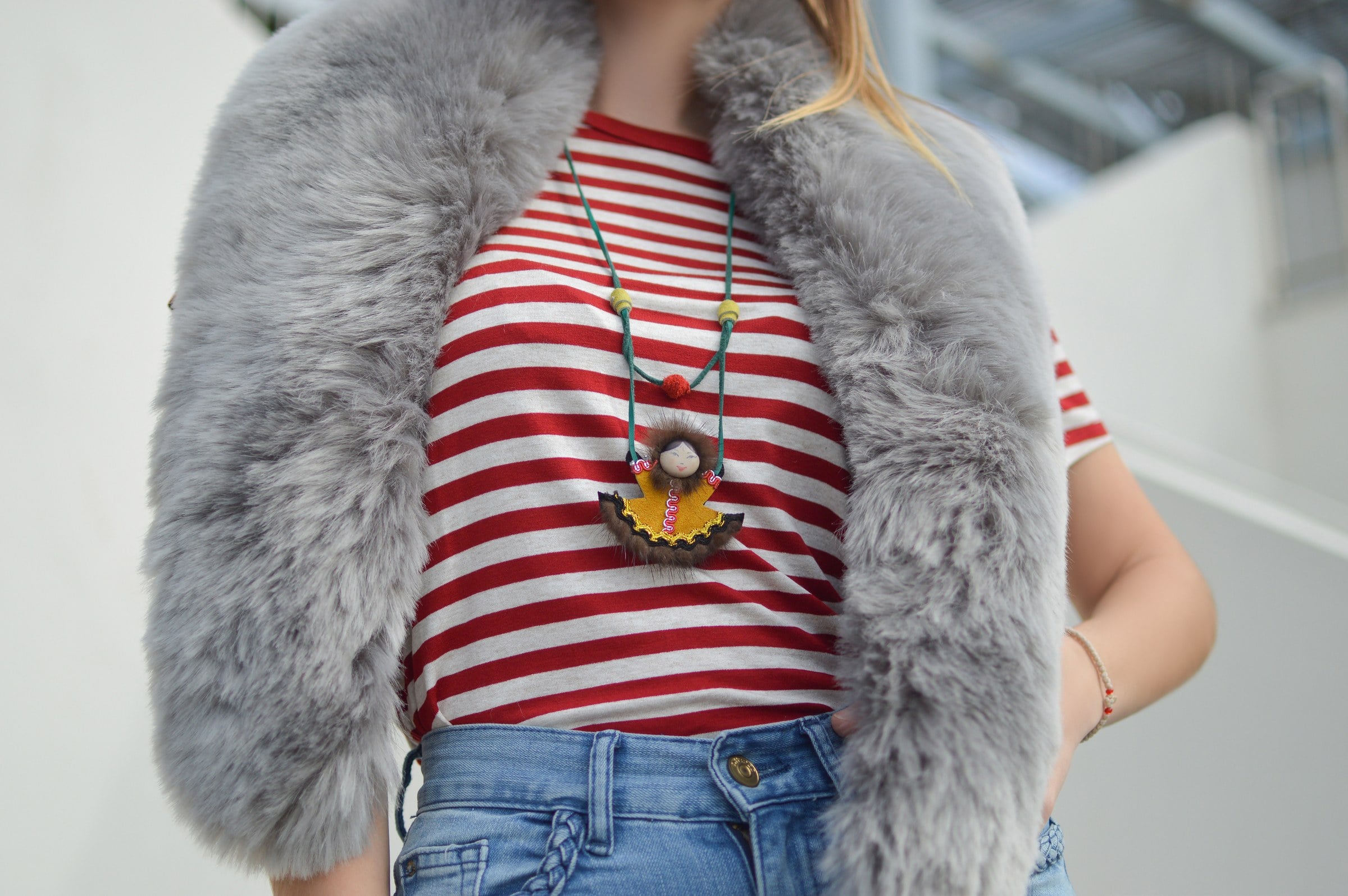
Pinterest pin: typography added to a crop of the same photograph for this article. Adapted from Pete Bellis petebellis, CC0, via Wikimedia Commons.