

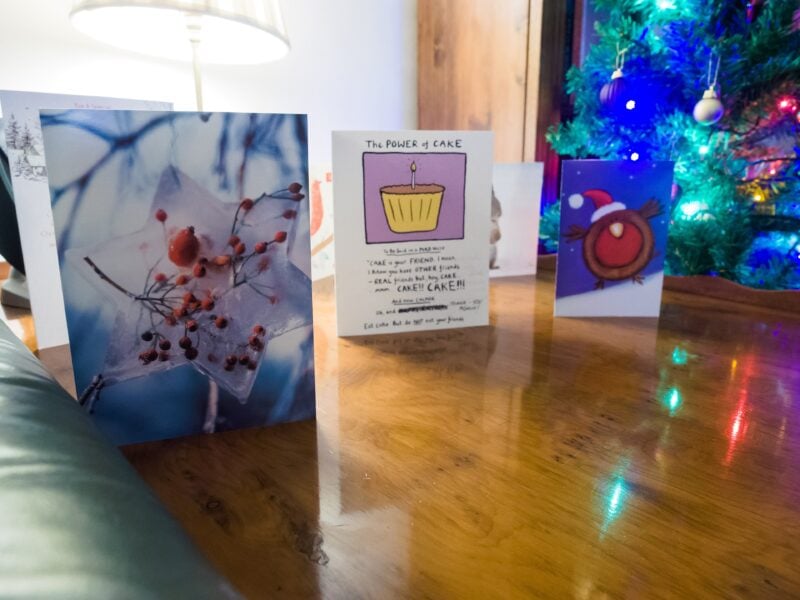
Photo: James Petts / Wikimedia Commons, CC BY-SA 2.0
Plastic-free Christmas cards for 2026 come down to three checks at the shelf: no glitter, no foil, no plastic in the packaging. Pass all three and the card goes in the recycling bin in January — or, in one case, into a pot of soil.
Three UK buys below were checked on 16 November: a plantable seed paper card at £1.75, the RSPB’s charity range, and a Woodland Trust pack of eight at £4.99. Seasonal prices move, so confirm at the checkout.
Plant it rather than bin it: a £1.75 seed paper card
Party Without Plastic’s Ho Ho Ho plantable Christmas card is sold as a single card rather than a pack, which suits teachers, neighbours and anyone who keeps one card on the windowsill long after the tree has gone.
- £1.75, A6 size
- Embedded with wildflower seeds
- Made from 100% recycled cotton waste seed paper, described by the shop as acid free and chemical free
- Planting instructions on the reverse; the inner left is blank for your message
- Comes with a 100% recycled Kraft envelope, delivered completely plastic free
- Produced, printed and packed in the UK
The shop is straight about what seed paper can and cannot promise. The paper has been tested, but “it is not possible to guarantee perfect growing results every time as this is largely dependent on circumstances beyond our control”. Treat the flowers as a bonus and the card as the point.
The two formats do different jobs. A single plantable card is for the one or two people who will notice it and keep it; a pack covers the whole list in one order. A single card costs more per person than a card from a pack, which is the trade-off for the seeds.
A single card and a paper envelope also set the tone for the parcel they travel with. If you are already planning zero-waste Christmas gift wrapping, a plantable card is the matching piece: paper, string and no film.
Charity packs that go in the recycling bin
For volume — the work list, the street, the family — two charity ranges are built around recyclability rather than decoration.
The RSPB’s charity Christmas cards are sold without the finishes that ruin kerbside recycling. The shop’s FAQ puts it plainly: “All RSPB charity Christmas cards are foil and glitter-free, and fully recyclable. If you’re not getting your cards from us, those containing glitter, foil or plastic embellishments will not be recyclable.” The wording matters: these are recyclable cards, not cards made from recycled board. Examples live on 16 November include packs of 10 at £5.00 and a pack of 40 at £12.00.
The range has history behind it. The RSPB produced the first ever charity Christmas card in 1898, selling 4,500 that year.
The Woodland Trust’s Woodland wildlife Christmas cards come as a pack of eight cards and envelopes, in stock on 16 November.
- £4.99 for one pack, or £4.75 each when you buy three or more
- 135mm high by 135mm wide
- Greeting inside: “With best wishes for Christmas and the New Year”
- “Our cards are fully plastic-free”
- Made in the UK from fully recyclable, FSC-certified board
- Printed with vegetable-based inks and water-based varnish
- Cards and envelopes presented together in a card wallet, totally plastic-free
Here too the board is FSC-certified and recyclable rather than recycled, which is the answer to give if someone asks. Apply the same packaging test across the rest of the table, including plastic-free Christmas crackers: look at the wrap, not only the product.
Six checks before you buy, and what to do with cards in January
Most cards fail on finish rather than paper. Run through this list before adding to basket:
- Glitter. The RSPB’s FAQ says cards containing glitter will not be recyclable.
- Foil. Metallic foil has the same effect, which is why foil-free is listed as a feature rather than assumed.
- Stuck-on extras. Plastic embellishments stop a card going in the recycling bin.
- The wrap. A card wallet, like the Woodland Trust’s, keeps a pack plastic-free; film sleeves do not.
- The envelope. Paper envelopes recycle with the card. Party Without Plastic supplies a 100% recycled Kraft envelope with its plantable card.
- The wording. “Recyclable” and “recycled” are different claims. The charity packs here are recyclable; the seed paper card is the one made from recycled cotton waste.
If you write cards over several evenings, put the finished ones back in the wallet or box they came in. The stack stays flat, nothing goes missing behind the biscuit tin, and the wallet is recyclable with the rest of the paper afterwards.
Then plan the afterlife before the cards arrive. Plantable cards go into a pot or a patch of soil, following the instructions printed on the reverse. Foil-free, glitter-free charity cards go in the household recycling once the decorations come down.
Anything with a picture worth keeping can be cut up instead. Card fronts make gift tags for next year, and shapes punched from them suit simple Christmas decoration ideas such as paper garlands and tree hangings. Keeping glitter out helps there as well, because plain card can still be recycled at the end of that second life. The same January question — where does this go? — decides plastic-free Christmas wreaths.
Order early if the multi-buy saving matters: the Woodland Trust’s £4.75 price applies only from three packs upwards. For near neighbours, hand-delivering saves the stamp and the queue.

- Gmail alternatives that run on green energy: Tuta, Posteo and mailbox.org encrypt mail in Germany - November 16, 2026
- A 20p deposit on plastic bottles and cans starts in England, Scotland and Northern Ireland on 1 October 2027 - November 16, 2026
- Silicosis among the workers who cut quartz countertops has California proposing a ban: what to choose instead - November 16, 2026