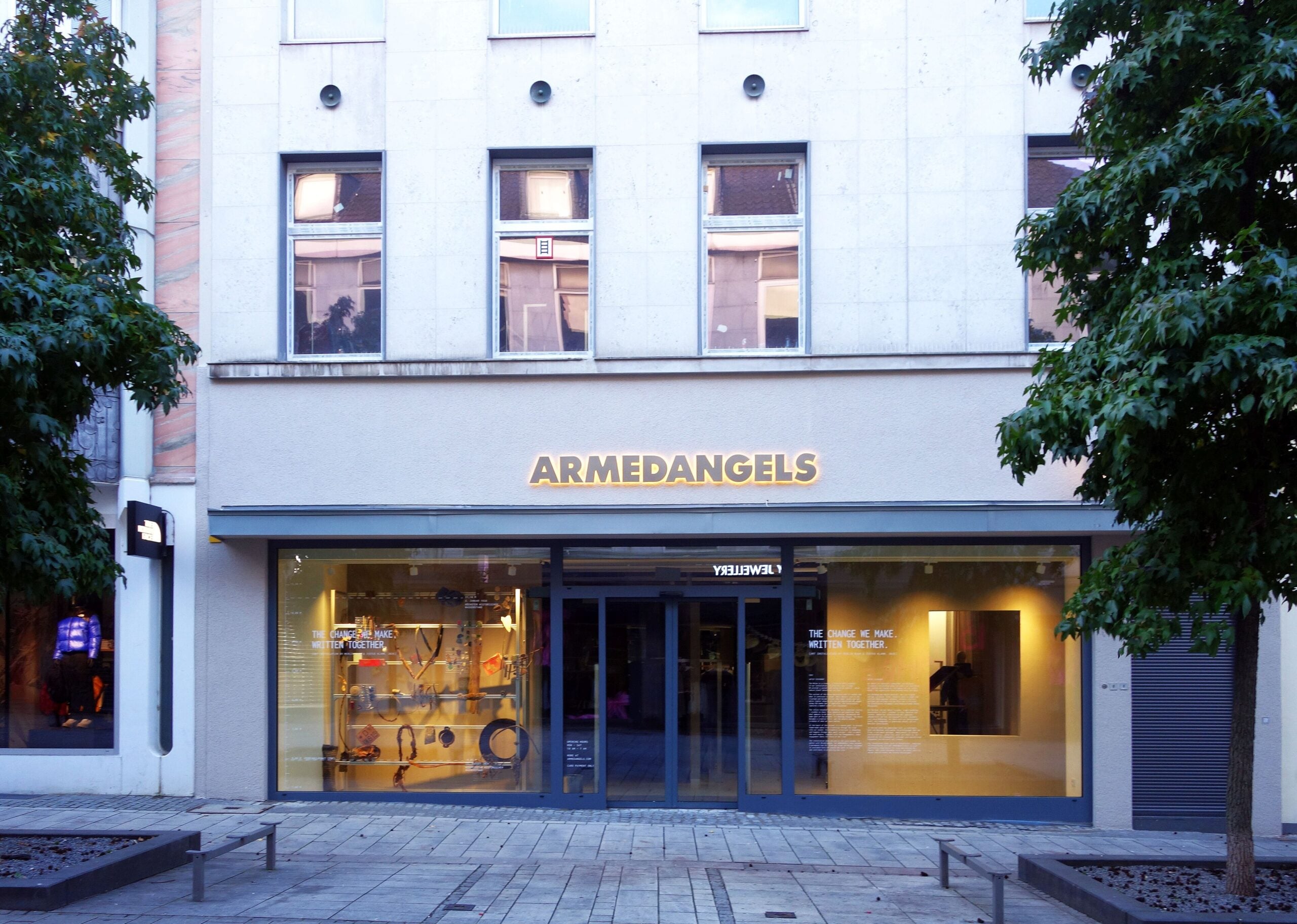
Armedangels has begun selling a padded outerwear collection, and the Cologne-based label says the Tencel lyocell shell fabric used on the jackets and coats is PFAS-free. The range went on sale on 16 November, online and in the brand’s own stores.
Those claims come from a press release published by FashionUnited on 16 November, carried under a Press Club byline, which means the performance and material detail in it is the brand’s own account rather than an independent assessment. The shell is a mini ripstop made from 100 per cent Tencel lyocell, a wood-based fibre, and it is the same fabric Armedangels used for its windbreaker. The brand says Time magazine named that windbreaker one of the best inventions of 2026; that listing is repeated here as the company’s claim and has not been checked independently.
Creative director Christiane Bördner said: “Radical Simplicity means reducing design to the essentials without compromising on character. With our padded outerwear, we combine clean silhouettes and modern quilting details with a colour palette ranging from natural hues to carefully placed pops of colour.”
Armedangels describes the thinking behind the fabric as a “Nature over Oil” approach, the brand’s own phrase. The quilting pattern is an abstract take on the company logo, and the colours run from earthy, muted tones to brighter accents.
What the PFAS-free claim actually covers
The PFAS-free wording applies to the shell fabric. According to the release, the material is PFAS-free, has a PFC-free finish and is breathable, offering “light rain protection without a membrane”. That is not the same as waterproof, and no waterproof rating is claimed for the jackets.
PFAS, or per- and polyfluoroalkyl substances, are used in water- and stain-repellent finishes, including on clothing. The US Environmental Protection Agency describes them as “widely used, long lasting chemicals, components of which break down very slowly over time”. That persistence is the reason the chemistry has become a flashpoint in outerwear.
The rest of the garment is a different matter. The official product page for the Quilted Å Jacket lists a lining of 100 per cent viscose (OnceMore) and a push-button trim made of metal. The padding is G-Loft, given as 80 per cent Tencel lyocell and 20 per cent polylactic acid, or PLA, a bio-based polymer. So the coats are not plastic-free, and the PFAS-free claim should not be read across the whole garment. The product page itself does not state PFAS-free; that wording appears in the release. The page does describe the jacket as vegan, saying the product contains no animal-derived materials.
The 97 per cent wind figure, and how the fabric is made
Armedangels says fine lyocell yarns are woven into a dense ripstop and then calendered under heat and pressure. According to the brand, that process gives the fabric up to 97 per cent wind protection. The figure is the company’s own, and it relates to the shell fabric rather than to a finished jacket worn in the field. The release does not publish test data alongside it.
On the filling, the release says G-Loft was chosen over a recycled polyester wadding, which the brand says “is often made from PET bottles and loses fibre quality during recycling”. That reasoning is Armedangels’ own, and the choice of a lyocell-and-PLA blend over recycled polyester is the clearest technical difference between these coats and a conventional padded jacket.
On sourcing, the Armedangels product page says the Tencel lyocell fibres used are derived from certified or controlled wood sources. Readers comparing how other labels are handling fibre choices this season can also read Eluxe’s guide to ethical knitwear for winter 2026.
Price, availability and what to check before buying
The jackets and coats went on sale on 16 November through the brand’s website and its own shops, according to the release. No euro or sterling price appears in that text. On 17 November the brand’s US shop listed the Quilted Å Jacket at $398. Prices and availability change, so that figure is worth rechecking at the point of purchase, and it applies to the US store rather than to a European listing.
The same product page gives a plain description of the cut: “The padded jacket has a straight silhouette with clear lines and side pockets.” The main material is listed as 100 per cent lyocell (Tencel).
Read the launch copy closely and the strongest claims are drawn narrowly. Wind resistance is quoted for the fabric. Rain protection is described as light and membrane-free. PFAS-free refers to the shell, not the lining, the trims or the filling. Reading environmental claims at that level of precision is a habit worth carrying into other categories too, from digital services such as email providers running on renewable energy to the insulation inside a winter coat.
For now, the headline numbers attached to this collection sit with the brand. The 97 per cent wind protection figure is Armedangels’ own, the Time listing is cited in its release, and the PFAS-free wording covers the shell fabric only.