

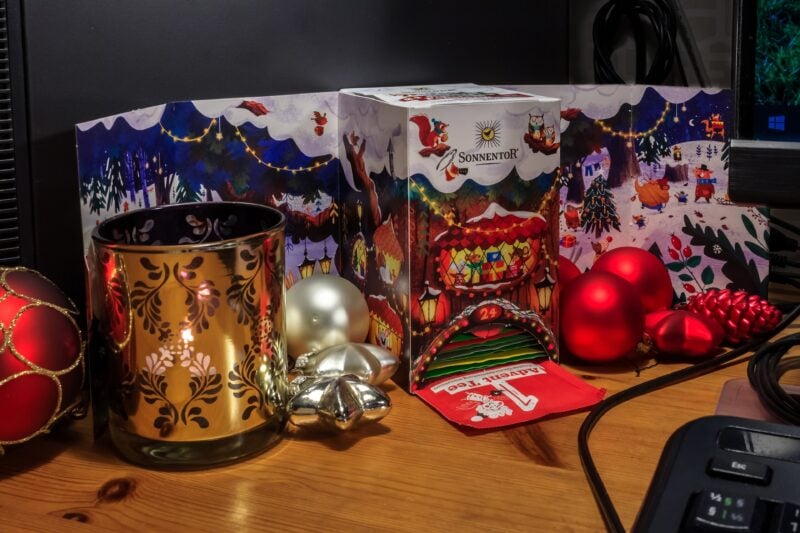
Woodmansterne, the British card publisher, says on its 2026 advent calendar page that “Using recyclable paper wallets and headers, all Woodmansterne Advent calendars are completely plastic-free.” The same page says the range has been rebranded under the Woodmansterne name for 2026.
Packaging colours have been refreshed alongside the name change, the company says, to add variety and create greater excitement on display in-store. The collection itself is paper and card, a format the company says it continues “to champion” against the waste of a filled calendar.
What Woodmansterne says about its 2026 range
Woodmansterne acquired Caltime, the advent calendar specialists, at the end of 2013. The company says Caltime had been making traditional paper calendars for almost 40 years, and that the purchase led to the Caltime by Woodmansterne collection, now carried under the Woodmansterne name.
The company says the range keeps the craftsmanship, charm and nostalgia customers liked in the Caltime line, and that every calendar is made and finished in the UK. It presents paper as a counter to festive excess, writing that there are “only so many mini cheese bites or tiny bottles of gin you can have with your breakfast”. Adults and pets, it adds, are welcome to use the calendars as well as children.
No consumer price is published. Woodmansterne sells through retail stockists, lists them on its site and keeps its trade pages behind a trade account login, so the calendars have to be found in shops. A household working to the same standard through the rest of December can extend it to plastic-free Christmas decorations, which raise the same question of what survives past Boxing Day.
Filled and fill-your-own sets from Luvvy and Uriginal Unverpackt
For a calendar that arrives ready filled, Luvvy lists a Natural & Plastic-free Advent Calendar – 24 Days at €44.99. It was in stock on 13 November 2026, ships from the Netherlands in one to two days, and carries free shipping on orders over €50. The shop was advertising a November sale at the time of checking.
The product page describes 24 minis and accessories drawn from more than 15 product categories, among them self-care, bath, body, aromatherapy and accessories, and says the contents are vegan and cruelty-free. On materials, the brand says the calendar contains “zero plastic – just paper, card, and thoughtful goodies that make December feel special”, in a sturdy paper or card box it describes as easy to recycle after use. Scented items, it warns, may contain naturally occurring allergens.
A different format comes from the zero-waste shop Uriginal Unverpackt, which lists a Zero Waste Advent Calendar – 4 doors to fill yourself under the Original Unverpackt brand. It is a four-door set, not a 24-day countdown: four drawstring bags in 100 per cent organic cotton, each 15cm by 20cm, an A6 sheet of number tags from one to four printed on plantable wildflower seed paper, and a 55m roll of flax yarn in a chosen colour.
The set was listed as in stock on 13 November 2026 in the ribbon colours offered on the product page. Prices differ by ribbon colour. The bags can be filled, decorated and hung as the buyer chooses.
The shop gives instructions for the seed paper. It should be torn into pieces and soaked in a bowl of water for a day, then put with the seeds into a pot of soil or a bed and kept from drying out for the next ten days, which can take longer in winter on a bright windowsill. The wildflowers germinate in light, so the paper is pressed down rather than buried.
A fill-your-own set shifts the waste question from the calendar to the contents, and small handmade items suit a bag of that size. Several of the ideas in plastic-free homemade Christmas gifts scale down to fit.
Reusable wood and fabric, as listed by Sustainable Jungle
For calendars meant to come out of storage each year, Sustainable Jungle’s guide to reusable and eco-friendly advent calendars was updated by Joy McConnochie on 10 October 2026 and edited by Amber McDaniel. The site discloses that the guide contains affiliate links and that it may earn a commission on purchases.
The guide sets out its criteria: calendars that can be refilled and reused every December indefinitely; natural materials including linen, cotton, wool felt and solid or FSC-certified wood, with no PVC and no plastic trays; plastic-free packaging, or packaging worth keeping such as a storage bag; small makers, artisans or fair trade workshops; and construction sturdy enough to become a family heirloom. It states that there is no regulated definition of “eco-friendly” or “non-toxic” for an advent calendar, so the terms can mean anything.
Among the fabric designs, the guide describes Craftspring’s Linen Advent Calendar as handmade from a blend of 55 per cent cotton and 45 per cent linen, with pockets of three by three and a half inches, produced by the Brooklyn studio with women artisans in India. Wee Gallery’s 24 Pocket Advent Calendar is described as screen-printed on 100 per cent organic cotton twill canvas in two designs, Winter Animals and Festive Friends, made in India and supplied in a keepsake bag.
On the wooden side, the guide lists Orange Tree Toys’ Winter Wonderland calendar in the UK, made from FSC-certified wood with 24 figurines to reveal daily, and says its child-safe paints and plastic-free packaging are part of the appeal. Stock was not verified for these calendars. The guide also says none of the brands featured has been through its full 22-criteria sustainability rating, although Wee Gallery and Lorena Canals have initial ratings.
Second-hand is the guide’s cheapest route. It points readers to preloved wooden and fabric calendars from Etsy sellers worldwide, with one caution: check that a listing is genuinely vintage and not “vintage inspired” or “vintage themed”. For anyone sewing their own, it suggests cutting 24 squares from an old pillowcase, tablecloth or shirt, stitching them onto a backing cut from an old curtain or bedsheet in rows of six, and painting or embroidering a number on each.

- Plastic-free stocking fillers for Christmas 2026, from vegan soap to bamboo cotton swabs - November 13, 2026
- Recycled cashmere brands with traceable supply chains, from Stella McCartney to Lanaioli - November 13, 2026
- Sustainable fashion brands sitting out Black Friday 2026, from Finisterre’s Blue Friday to Mia Fratino - November 13, 2026