The check that settles it before the till is the sewn-in content label, which has to state the actual fibre percentages under labelling law in the United States and the European Union. A hangtag that says only “Cashmere blend” settles nothing.
Two further checks can be done in a shop with nothing but a hand. One is a rub of the palm across the knit to see whether fibres roll into balls. The other is a side-to-side stretch of the body of the jumper to see whether it springs back.
Both come from the Cashmere and Camel Hair Manufacturers Institute, the trade body also known as the Cashmere and Camel Hair Council, which publishes a purchasing guide for shoppers.
Start with the sewn-in percentage, not the hangtag
CCMI tells buyers to check the loop labels and the hangtags for a cashmere percentage. Its page on mislabelling says retailers sometimes use sleeve hangtags reading “Cashmere” or “Cashmere blend” when the garments only have 10 per cent cashmere or less.
Selling a garment without a statement of actual fibre percentages is a violation of the law in the markets the body lists. Those include the Wool Products Labeling Act, enforced in the United States by the Federal Trade Commission, and Regulation (EU) No 1007/2011 in the European Union. The page also names standards in Japan and China.
So the hangtag is marketing copy. The sewn-in label is the legal statement, and it is the one to read.
Percentage then does the work. CCMI is blunt about thin blends: “Beware of garments blended with very low (under 20%) cashmere. Small amounts of cashmere do not significantly alter the performance of the product.”
A jumper can therefore be honestly labelled, perfectly legal and still a poor buy at cashmere money, because a few per cent of the fibre will not significantly change how the garment performs.
What to look for on the label:
- A numeric percentage for every fibre, not the word “blend” on its own.
- Cashmere content at 20 per cent or above if the point of the purchase is cashmere performance.
- Agreement between the hangtag and the sewn-in label. If they differ, trust the sewn-in label and ask the retailer.
The palm rub and the stretch test
The guide’s quick check is physical. “A quick test is to rub the palm of your hand on the surface of the garment and see if fiber starts rolling into little balls. If it happens, watch out,” it says.
Good cashmere, by the body’s account, rarely pills after being worn and washed, and actually becomes softer with age. The reason it gives is fibre length, because longer fibre makes stronger yarn that pills less.
The limit of this test is worth being clear about. Pilling under the palm is a signal about quality, not proof that a garment contains no cashmere or that the label is false. Short-fibre cashmere is still cashmere. It simply will not wear the way a buyer paying luxury prices expects.
The second check tests the knit. CCMI advises shoppers to “stretch the garment body side to side and see if it snaps back into shape. If it does not, it suggests possible low quality fiber or very loose tension when knitted.”
The guide adds that loosely knit, limp fabric is the hallmark of a cheaply made jumper. A knit that sags after a gentle pull has told you something about construction before any question of fibre content arises.
There is a comparison test too. Hold the cashmere against a fine wool jumper on a nearby rail. Cashmere “should feel much better, your fingers can tell the difference,” the guide says.
Price is a sanity check, not a verdict
No figure exists below which cashmere is automatically fake, and CCMI publishes none. What it publishes instead is a supply fact. Worldwide cashmere raw material production is approximately 1 per cent that of sheep’s wool for apparel, and fabric and garment prices will reflect that scarcity.
From that the body draws a warning rather than a number: “Watch out for so-called bargains and look for genuine quality behind the label.”
Blends follow a logic that shoppers can check for themselves. Silk is less expensive than cashmere, so a silk blend should be cheaper than the comparable 100 per cent cashmere garment. Cotton blends are lower priced. A silk blend priced level with solid cashmere on the same rail is a question to put to the shop assistant.
Price also cannot rescue a thin blend. A costly jumper carrying 10 per cent cashmere will still be dominated by the fibre that makes up the rest of it.
CCMI’s own first piece of advice has nothing to do with testing at all. Buy from a long-term supplier whose garments have performed well. The body does not recommend particular shops.
For buyers who also want to know where the fibre came from, Eluxe’s guide to recycled cashmere brands with traceable supply chains covers labels from Stella McCartney to Lanaioli, alongside an earlier roundup of recycled cashmere knitwear brands. Both pieces look at brands and sourcing rather than the in-shop fibre checks described here. Shoppers comparing cashmere with wool alternatives can also check ethical knitwear for winter 2026.
The sequence in the shop is short. Read the sewn-in percentage, rub the palm across the surface, stretch the body side to side, then ask whether the price makes sense for the percentage printed on the label.
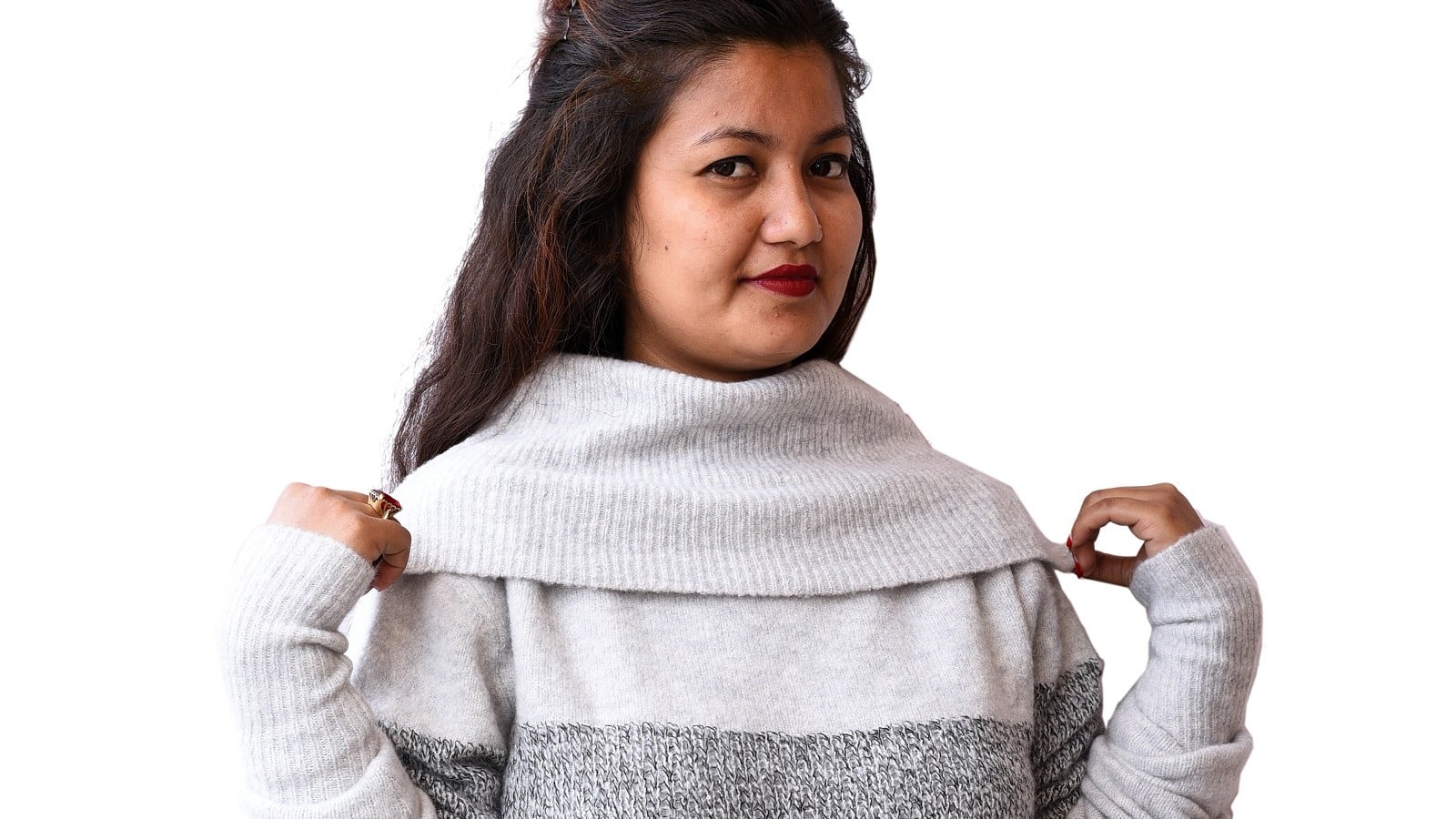
Featured image and Pinterest pin: a knitted turtleneck jumper. Photo: Ssblucky7, CC BY-SA 4.0, via Wikimedia Commons. Share-alike: derivatives must use the same licence.