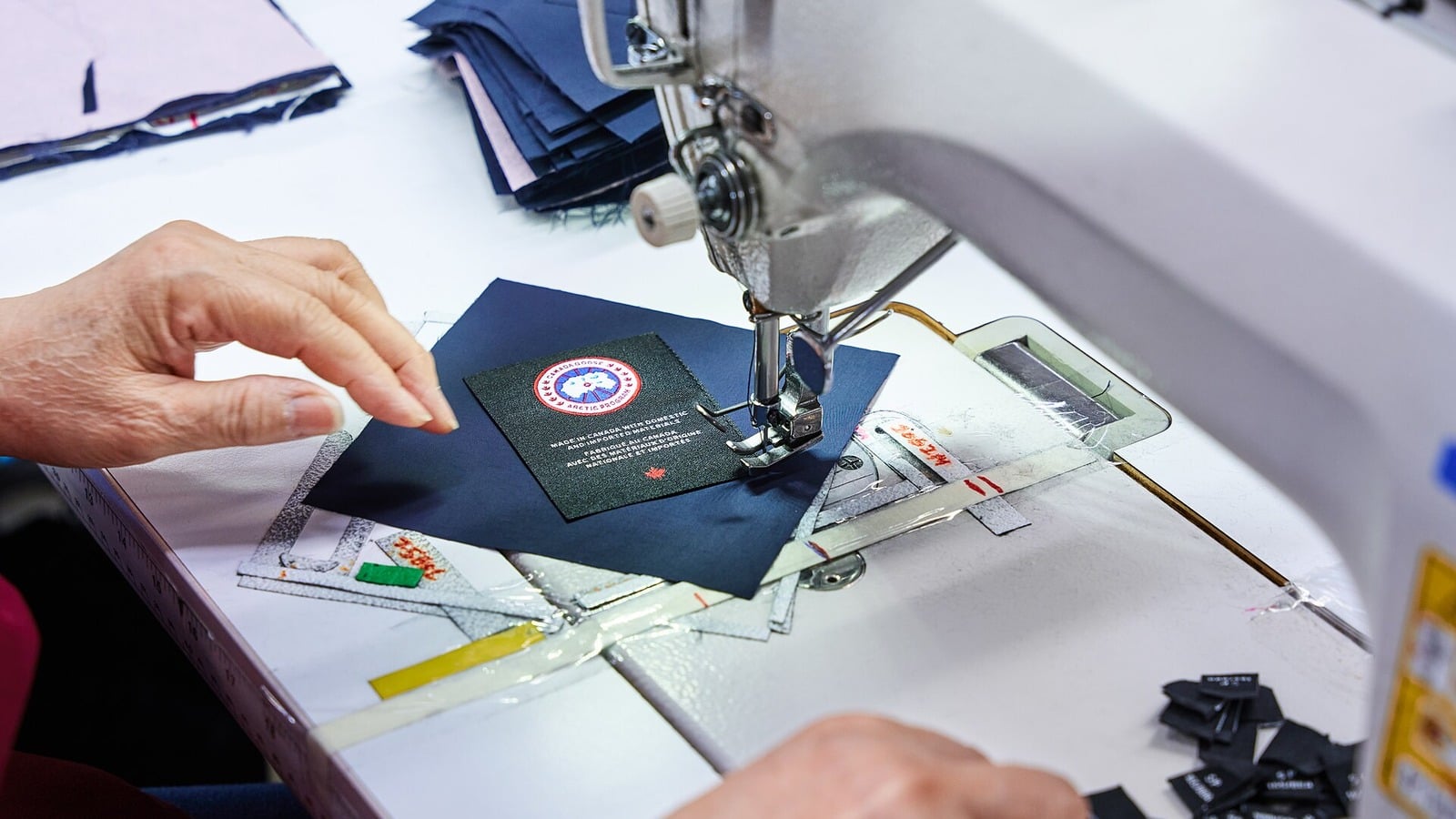
Authenticating a second-hand Canada Goose parka begins with a date. The hologram label inside, the Arctic Disc on the sleeve and the trim around the hood have all changed since the brand took its current name, so a check that confirms a 2024 coat can wrongly condemn a genuine one from 2009. Work out the era first, then inspect the tags and stitching against a verified reference from the same years.
A short run of dates sets the boundaries for any resale listing you are looking at.
- 2001: Snow Goose became Canada Goose when Dani Reiss took over, and the Arctic Disc replaced the Snow Goose emblem, according to the brand’s Generations vintage page. Classic Freestyle Vests produced before 2009 carried an embroidered green maple leaf on the front.
- 2011: holograms were introduced, though not on every item.
- Fall 2017: a hologram label was sewn into every product as proof of authenticity.
- 2018: a label revision moved the QR code and serial to the reverse.
- December 2021 and the end of 2022: fur purchasing stopped, then manufacturing with fur ceased.
The hologram and the labels sewn inside
The Canada Goose Generations help centre confirms that holograms arrived in 2011, but were not applied to every item at that point. From Fall 2017 onwards, a hologram label has been sewn into every Canada Goose product. The same page states that vintage or older pieces made before Fall 2017 may not have one at all, which is why a missing hologram on a parka from 2013 is not automatic evidence of a counterfeit.
Due West, an authorised Canada Goose retailer in Toronto, describes the Fall 2017 onward label as a sewn-in tag carrying an exclusive polar bear image, with elements that become visible from different angles. Tilt it under good light and the image should shift.
The Veridia luxury authentication guide adds detail on how the label has been constructed and dated. It should be physically sewn in and never a flat glued sticker, with the multi-angle polar bear image appearing from the second half of 2017. Early holograms carried a printed serial on the front. A 2018 revision moved the QR code and serial to the reverse, so the placement of those markings should match the era the coat is being sold as.
Veridia is blunt about the limits of that test. A scannable QR code or a polar bear hologram on its own does not guarantee authenticity, because high-grade counterfeits now replicate both. The guide therefore sends buyers to the main neck label and the quality assurance tag, comparing font weight, spacing, alignment and punctuation against a confirmed genuine example from the same period. The logic mirrors the digital-label checks set out in Eluxe’s guide to spotting a fake Moncler puffer, where a working code proves only that a code exists.
The Arctic Disc on the sleeve
Both Due West and Veridia treat the disc patch as a key tell. The Arctic Disc has been in use since 2001, when it replaced the Snow Goose emblem.
Due West lists poor stitching, colour variation in the thread, misshapen maple leaves and misspellings of the words Canada or Arctic as counterfeit indicators. Veridia describes what a genuine disc should look like instead: dense, uniform embroidery, sharply defined maple leaves and correct spelling of CANADA and ARCTIC. Loose or striped stitching, thread colour shifts, malformed leaves and typographical errors all count against a coat.
Veridia also cautions that minor variation can appear on genuine discs, so no single flaw should decide the question. Weigh the disc alongside the label, the stitching and the seller’s provenance before reaching a view, the same cumulative approach taken in Eluxe’s guide to spotting a fake Barbour wax jacket.
Fur trim, fill and the limits of brand authentication
Trim is the clearest era marker of all. Canada Goose’s animal welfare policy update records that the company ended all fur purchasing in December 2021 and ceased manufacturing products with fur at the end of 2022. Heritage coats made before that cut-off may carry coyote ruffs. Newer production does not.
Due West describes authentic heritage ruffs as thick coyote fur, while counterfeits often look scraggly, tangled or dirty, or substitute coarser raccoon fur, sometimes with poor hood seam quality. Veridia stresses the reverse point for anyone buying recent stock: coyote checks apply only to pre-December 2022 fur pieces, because later production uses synthetic or reclaimed trim or is fur-free, so the absence of coyote fur on a newer coat is not a fake signal. Buyers who would rather avoid animal trim entirely can compare options in Eluxe’s roundup of sustainable vegan coats.
Fill is harder to see and more consequential. Due West relays Canada Goose’s own anti-counterfeit warning that fakes have been found filled with “feather mulch” coated in bacteria, fungus and mildew, instead of sanitised Canadian down. Because that filling sits out of sight inside the shell, it is the one element a buyer cannot inspect directly, which puts more weight on the labels, the disc and the provenance of the seller. The welfare questions around down supply chains more broadly are covered in Eluxe’s piece on why down deserves closer scrutiny.
One final limitation shapes every resale purchase. Veridia states that Canada Goose itself only authenticates items within 30 days of purchase from an authorised retailer, with proof of purchase, so a parka bought on a marketplace falls outside that window. Due West advises buying only from Canada Goose or an authorised retailer, and notes that suspicious sites can be reported to anti-counterfeit@canada-goose.com.
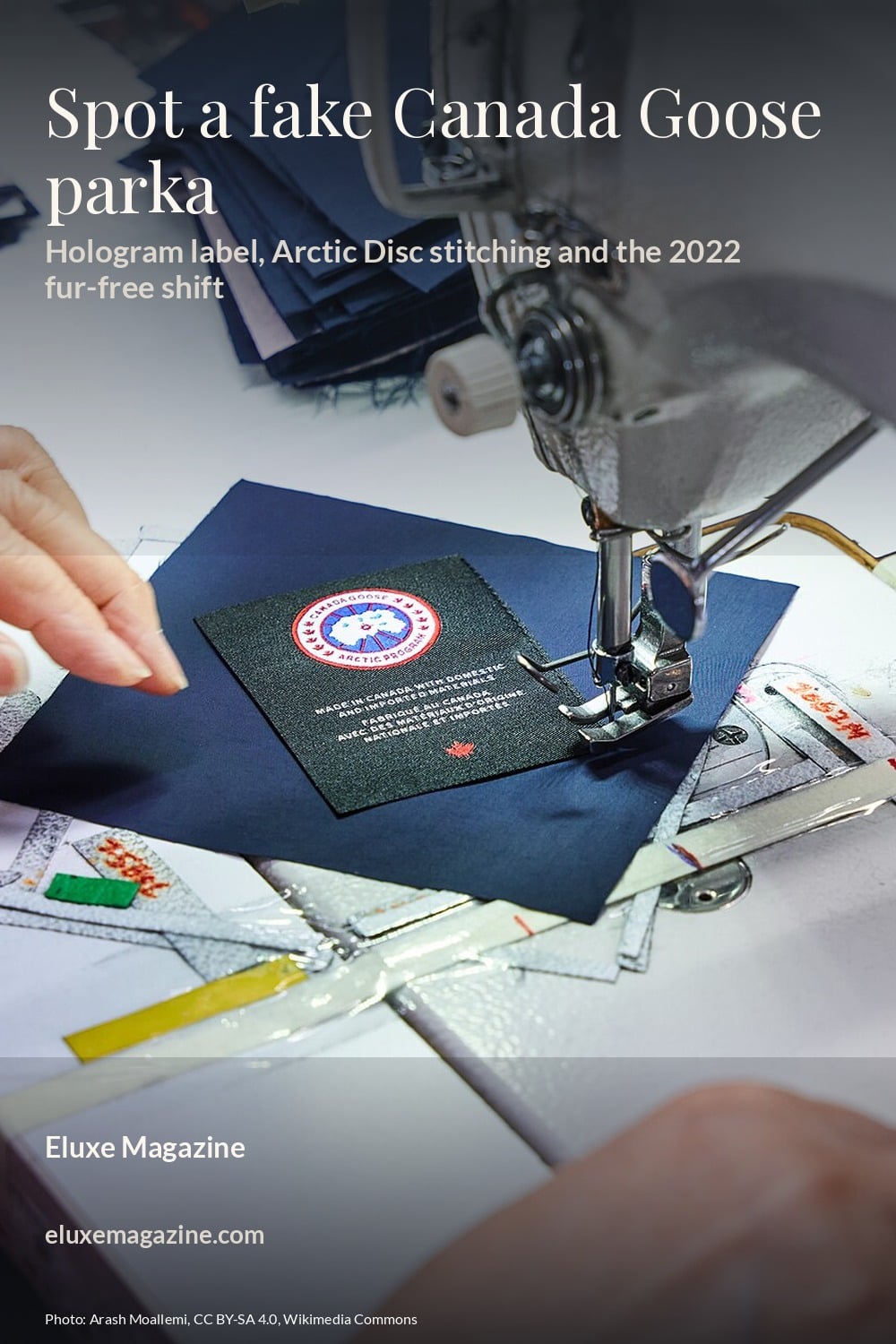
Pinterest pin: typography added to a crop of the same factory photograph of an authentic Arctic Disc being stitched. Adapted from Arash Moallemi, CC BY-SA 4.0, via Wikimedia Commons. Share-alike: derivatives must use the same licence.