No single check proves a pair of UGG boots is genuine, but the brand’s own pages set out a short list of things to look at before the money goes: the interlocking logo, the framed heel label UGG calls the “License Plate”, the sun logo on a Classic outsole, the flex of the sole, and the box everything arrives in.
Black Friday falls on 27 November 2026, one week from now, and these checks are far easier to run before an order is placed than after a parcel has landed.
One point needs dating from the start. The reflective security label sewn into the left boot is official UGG wording, but it comes from a statement made in 2014, and the current official pages describe a different set of markers. Both are covered below.
What UGG’s current product-education page says to check
UGG’s product-education page on the brand’s Australian site is the plainest official summary available. UGG presents itself there as the official UGG brand in over 130 countries, including the US, the UK, China, Japan and Korea.
The checks listed on that page:
- The logo. Since 1990, the page says, “the interlocking U-G-G logo has been used, with the bold middle G standing out in front of the other letters, while remaining fully connected to the design”.
- The heel. “The UGG Logo on the heel of our products is known as ‘The License Plate.'” UGG describes it as a framed rectangle box typically found on the heel.
- The outsole. The sun logo, which UGG calls a hallmark of its California heritage, “appears on the bottom of all Classic Boot outsoles, along with the patented Sun Tread outsole, symbolizing authenticity”.
- The flex. “Our UGG boots are easy to flex and bend and not to mention easy to walk in!”
- The box. “UGG boxes are high quality with authentic labels containing an image of the product, sizing information, and security labels.”
- The delivery. “Authentic UGG products will never arrive at your doorstep in a bag.” The only place to find a genuine UGG shopping bag, the page says, is one of the brand’s own stores.
That last point is the most useful one for marketplace buying. A boot posted in a plastic bag with no box has already failed an official check before the stitching has been looked at.
The 2014 left-boot label, and why labels change
The sewn-in security label belongs to an official UGG statement issued through PR Newswire in 2014. UGG said then that “every authentic UGG product comes with a security feature contained in a reflective security label sewn into the left shoe or boot and/or security sticker on the shoebox, allowing instant authentication of genuine products”. The brand also said it had compiled an online gallery of authentic and counterfeit product side by side.
Twelve years on, that wording is best treated as a check for its era. As of 20 November 2026, the text of the product-education page does not describe a sewn-in left-boot label. It points instead to the heel licence plate, the sun logo on the Classic outsole and the security labels on the box.
UGG’s official Taiwan authenticity page makes the reason explicit. As styles change, it says, “labels, soles, inner labels and boxes may be updated”. The page itself displays both old and new UGG anti-counterfeit labels. So the absence of one particular label on a 2026 pair is not proof of a fake, and a convincing-looking label is not proof of a genuine one.
Construction is the harder thing to copy, and the Taiwan page spends most of its space there. The tells it describes on counterfeit pairs include:
- A shaft that sits too high.
- Heel-label type that is enlarged or simply incorrect.
- Lining of synthetic material, not visible from the opening of the boot.
- Linings that are not twinface sheepskin, such as synthetic sewn to cow or pig suede, or a triple lining that is only part sheepskin.
- Mismatched colours between the heel label, the suede heel and the binding.
- Sloppy stitching, and loose or worn stitches. On genuine boots, the page says, stitch length is even and neat.
- A flatter toe. Genuine boots are described as slightly rounded at the toe.
- Poor box printing, and poor upper and outsole materials.
- Hangtags. The page states that “Classic products do not use hangtags”, and shows common fake hangtags.
The Taiwan page repeats the flex test as well, saying outsoles can be flexed and that genuine boots stand up to it.
Where to buy, and why one check proves nothing
The brand’s standard advice is the least glamorous and the most reliable. Buy from:
- UGG.com
- A UGG store
- A reputable authorised retailer
Everything else is risk management. A pair that passes the logo test, the heel test and the flex test may still be counterfeit, and passing a check is not a guarantee of authenticity, because labels and construction have changed over time. The sensible approach is to stack the evidence: seller history, the state of the box, the stitch line, the colour match between heel label, suede heel and binding, whether the lining reads as twinface sheepskin, and whether the order turned up in a bag.
The same method applies across luxury and heritage buying. Eluxe’s guide to spotting a fake Hermès scarf and its checklist for spotting a fake Barbour wax jacket both work the same way, by adding up small details rather than trusting a single logo or tag. Readers weighing alternatives to sheepskin boots can also compare vegan and sustainable winter boot brands for snow and slush.
Discount week sharpens the pressure to decide fast. Anyone unsure of a listing can take the slower route the brand itself recommends, which is to buy from UGG.com, a UGG store or an authorised retailer.
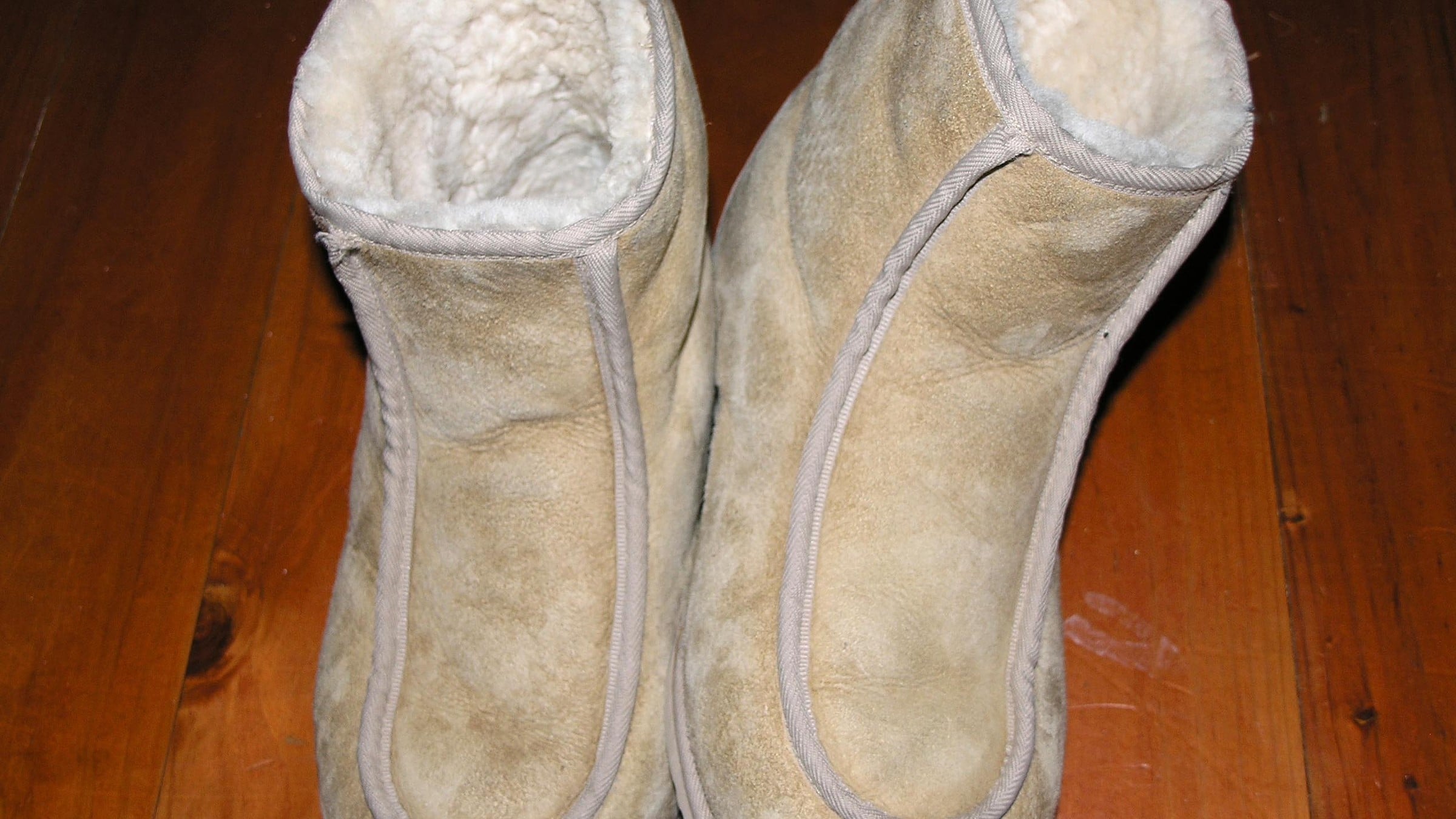
Featured image and Pinterest pin: sheepskin boots, not an official UGG product image and not shown as verified authentic pairs. Photo: SeanMack, CC BY-SA 3.0, via Wikimedia Commons. Share-alike: derivatives must use the same licence.