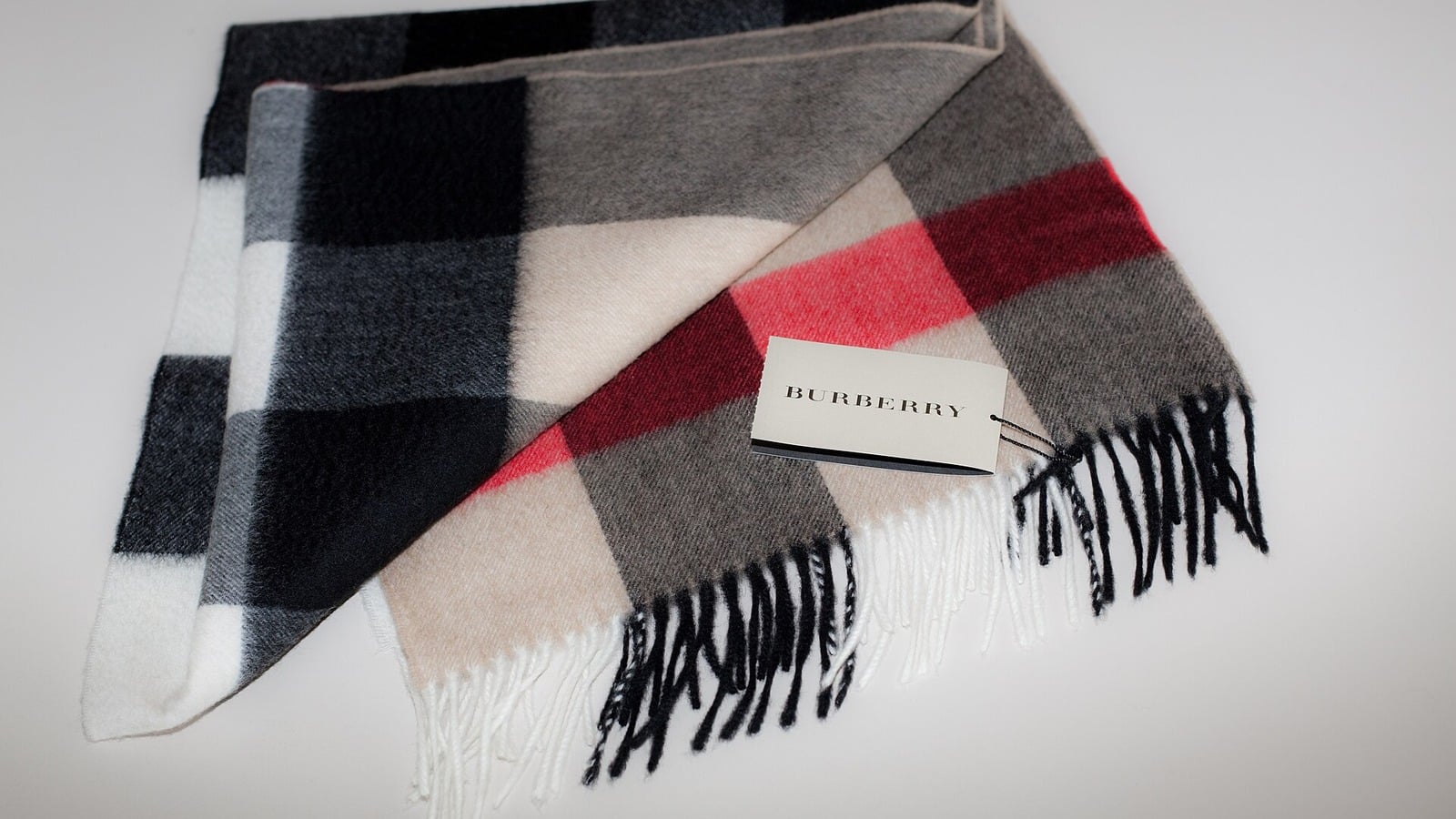
Buying a Burberry check cashmere scarf second-hand means judging the cloth without any help from the brand. Burberry’s own customer service FAQs state that it does not offer an authentication service, and that only a store receipt or an order confirmation from a Burberry store, Burberry.com or an authorised retailer proves a piece is genuine. Where that paperwork is long gone, the weave, the fringe and the cashmere label have to speak for themselves.
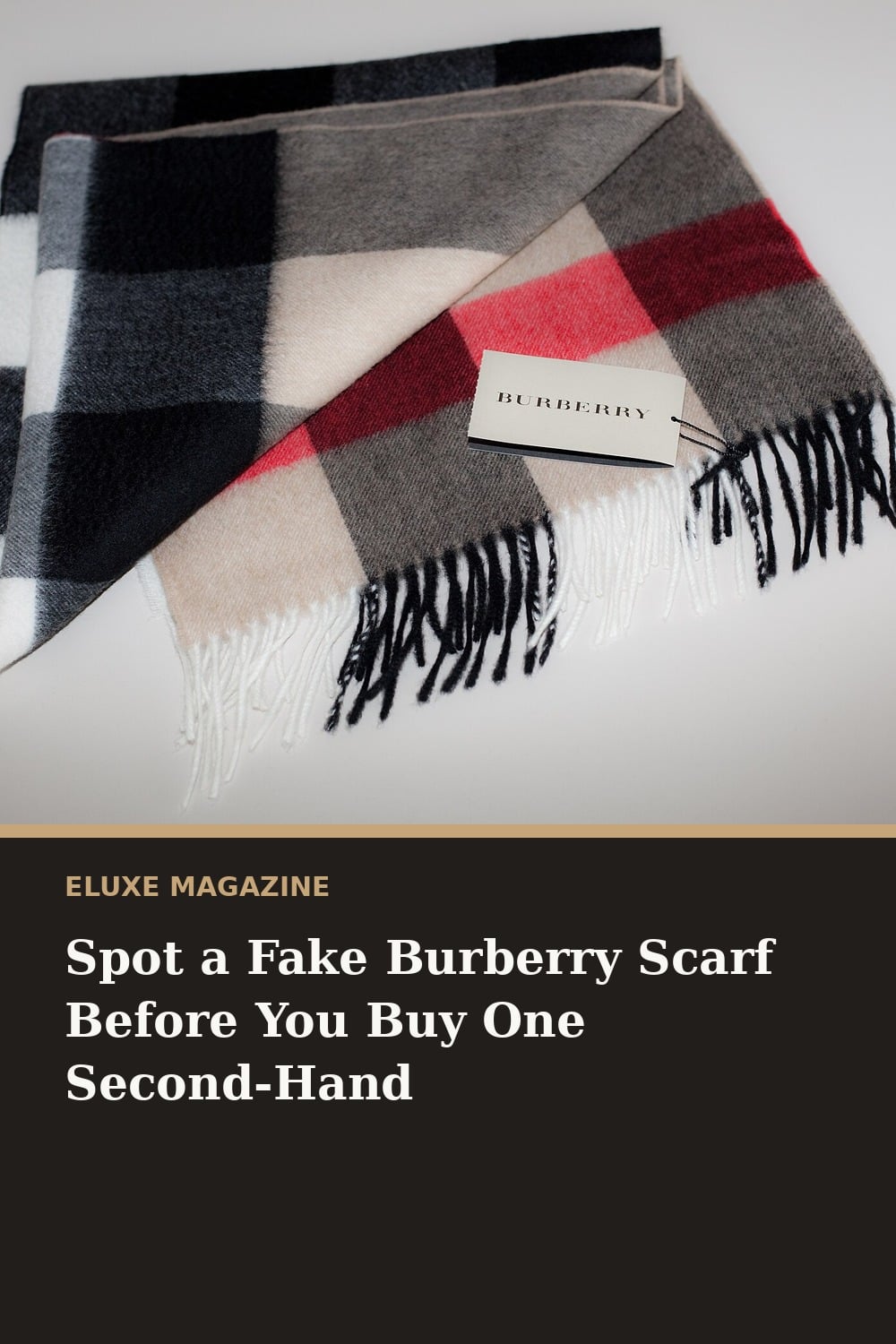
The reference point for most buyers is the classic check cashmere scarf. It measures roughly 168 x 30 cm plus fringe and typically retails between $480 and $620 new, according to LuxeDetect’s Burberry check scarf authentication guide, updated in November 2026. The guide’s first and firmest rule is that the check must be woven through the cloth and show on both sides. A listing priced far below that benchmark, with no receipt attached, earns every one of the six checks below.
The check must be woven through and show on both sides
On a genuine check cashmere scarf the pattern is woven into the cloth, so it appears on both faces, slightly softer on the reverse. The lines run straight and square to the edge, and the proportions are fixed: a warm camel ground, true black bars, white lines and one clean fine red line.
Counterfeit signs the LuxeDetect guide lists:
- A check printed on one side only, leaving a blank or ghosted reverse.
- Distorted stripe widths, such as a red line far too thick.
- A coarse, open weave with no brushed cashmere halo, common on reversible check and navy copies.
The second check is quick. Look into the plain camel squares between the stripes. On genuine check cashmere scarves that ground is plain brushed cashmere, with no Equestrian Knight horse and no large “BURBERRY” wordmark woven tone-on-tone into the squares. Some non-check Burberry scarves do carry a woven wordmark on a plain end panel, so apply this test to check scarves only.
Fringe, cashmere label and hand-feel
The fringe is where cheap production shows first. Genuine fringe bundles are even, cleanly finished and hand-twisted or hand-knotted from the same yarn as the scarf. Fakes tend to use machine-serged or glued edges, uneven tassel lengths, or frizzy synthetic fringe.
Next, the label. Classic cashmere scarves woven in Scotland today carry a woven label reading “Made in Scotland” plus the fibre content. Older genuine “Burberry London” or “Burberrys of London” scarves often read “Made in England” instead, so an English label is not in itself a problem on a vintage piece.
Red flags on labels include printed rather than woven lettering, loose fuzzy weaving around the characters, and a caramel-brown “London, England” label in place of Burberry’s pale cream or beige one. That brown version turns up on coarse check and navy copies. Country text alone proves nothing, because counterfeiters can copy any country name they like.
The fifth check is tactile, and it is the one photographs cannot settle. Genuine cashmere feels soft, dry and airy, warm yet light, with a fine even fibre halo and a faint natural lustre. Scrunch a corner in your fist and it springs back. A new scarf should show no pilling at all.
Synthetic “cashmere” gives itself away by feeling slippery and cool, or coarse and scratchy. It stays creased and limp after scrunching, and it may already be pilling while still being sold as new.
Packaging, provenance and buying second-hand safely
Boxes, swing tags and authenticity cards are the weakest evidence of all. They are easily counterfeited and prove nothing on their own, which is why sellers who lead with photographs of the box rather than the weave should prompt more questions. Provenance rests on seller documentation, meaning an original receipt from a Burberry store, Burberry.com or an authorised retailer, or on independent inspection.
Before money changes hands on a second-hand listing, ask for:
- The original receipt or order confirmation, with the retailer name visible.
- Daylight photographs of both faces of the scarf, side by side, so the reverse can be judged.
- A close image of the fringe ends and of the woven cashmere label, flat and in focus.
- A measurement against a tape, to compare with the roughly 168 x 30 cm plus fringe benchmark.
A seller who declines all four is telling you something useful. Platforms that run their own inspection services place a trained eye between buyer and parcel, and that is worth more than any card tucked into a box.
The same logic applies across heritage brands with heavily copied classics. Eluxe’s guide to spotting a fake Barbour wax jacket works through stitching and linings, the guide to fake Moncler puffer authentication checks sets out what to examine on down outerwear, and the guide to fake UGG boots covers the discount traps that cluster around Black Friday. Buying one well-made scarf that stays in use remains the greener option, which is reason enough to study the weave before paying.
Photo: Simon Ebner, CC BY-SA 3.0, via Wikimedia Commons.