

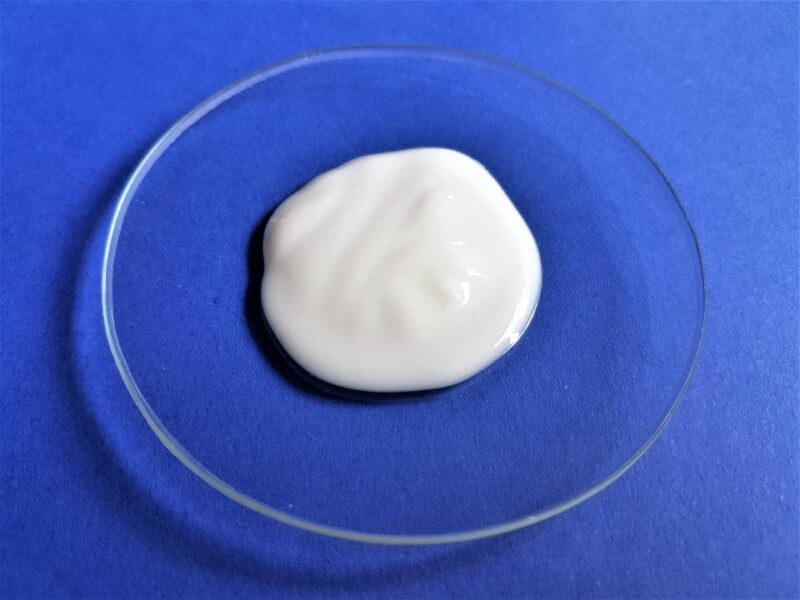
ATTITUDE’s Sensitive Natural Body Cream in Fresh apple carries the EWG Verified mark, according to its listing in EWG’s Skin Deep database, where the data was last updated in March 2026. Ingredients recorded on that page include oat kernel flour and shea butter.
Two published assessments sit behind most current shortlists for cold-weather body care. Skin Deep records ingredients and carries EWG’s own verification mark, while Consumer Reports evaluated the ingredients in more than 80 body lotions in January 2026 alongside the programmes Made Safe and Made Wise.
What the EWG Verified mark covers
EWG sets out the mark in its own wording on the Skin Deep page: “This product bears the EWG Verified ® mark, meaning that the product meets EWG’s strictest standards for health and safety. It avoids any of the ingredients on EWG’s ‘Unacceptable List’ and provides full transparency of ingredients, including fragrance.”
The page lists three criteria: the product meets EWG’s overall product hazard-score criteria, it contains no ingredient on the group’s “Unacceptable” list, and the company discloses every ingredient, fragrance included. EWG adds that the mark “indicates that the company’s ingredient disclosures show the product has met our full criteria to ensure it adheres to our standards for health”. The language describes ingredient disclosure, not the treatment of any skin condition.
Skin Deep carries two separate things. Products listed in the database are scored for hazard on a scale of one to ten, which is a listing rather than an endorsement; a smaller group additionally bears the EWG Verified mark, which companies apply for product by product. NonToxicFinder, whose editorial team published an updated round-up of EWG Verified lotions on 9 August 2026, reviewed by founder Tim Masterson, makes the same separation explicit and checks each of its picks against the mark shown on the maker’s own product page.
The creams that carry the mark
NonToxicFinder’s pick for most adults is ATTITUDE Body Lotion for Sensitive Skin with Oat, Unscented, in a 16 fl oz bottle with no added fragrance. For skin that needs more, the article is direct: “If your skin is very dry, step up to a cream: ATTITUDE’s Body Cream carries the same mark in a richer texture.”
That cream is the unscented 8 fl oz Sensitive Skin formula, described in the article’s table as a rich cream. A scented version, Orange Blossom & Eucalyptus, appears in the same table at the same size. Two products for children complete the list: Babo Botanicals Sensitive Baby Hydrating Baby Lotion, fragrance-free and sold in 8 oz and 14 oz sizes, listed as suitable from birth, and ATTITUDE Baby Body Lotion Unscented in 16 fl oz.
ATTITUDE sums up what the mark means for its range as “formulated without ingredients of concern, full transparency and science-backed formulas”, as quoted in the round-up. Texture is the working difference within that line: the oat lotion is described as lightweight and the 8 fl oz cream as the richer format, which is where the article points very dry skin. Readers comparing these with certified organic formulations will find a wider field in Eluxe’s guide to the best organic body lotions.
What Consumer Reports found in more than 80 lotions
Consumer Reports took a broader sweep. Writing on 29 January 2026, in a piece updated the following day, Sydney Cook reported that the organisation had evaluated the ingredients in over 80 body lotions, from drugstore to luxury brands, with Made Safe and Made Wise, looking for known and suspected links to environmental and human health concerns.
Dr. Bronner’s, Ursa Major and Weleda took three of the top places. The “Top Choices” group, listed alphabetically and marked “no known risks”, also includes Annmarie Skin Care Radiant Skin Silk Body Lotion, Avalon Organics Aloe Unscented Hand & Body Lotion, Fitglow Beauty Cloud Ceramide Body Cream, True Botanicals Chebula The Hand Cream, Ursa Major Botanic Buzz Body Lotion and Weleda Unscented Body Lotion, alongside four Dr. Bronner’s organic hand and body lotions in lavender coconut, orange lavender, patchouli lime and peppermint.
Three ingredient groups drew the evaluation’s attention. Phenoxyethanol, a preservative that became common as companies moved away from parabens, splits opinion: supporters point to its permitted use in small amounts in the European Union, while critics say the version used in products is made synthetically with industrial chemicals linked to cancer and genetic harm, and that small traces can remain.
Mineral oil, petrolatum, liquid paraffin and microcrystalline wax are refined from crude oil and can be contaminated with polycyclic aromatic hydrocarbons, some associated with cancers. EU rules require those ingredients to meet purity standards, but US companies are not obliged to use fully refined grades, and labels rarely say which has been used. Undisclosed fragrance is the third group: US trade secret law allows “fragrance”, “parfum” and “natural fragrance” to stand in for a full formulation.
On what to look for instead, Kevin Sharghi, a dermatologist and assistant professor at Johns Hopkins School of Medicine, told Consumer Reports: “Think of lotion as a team: Humectants bring in water, emollients smooth, and occlusives lock it all in.” Sharghi recommends hyaluronic acid and glycerin as humectants. Emollients include squalane and plant oils, butters and waxes such as shea, jojoba, cocoa, argan, sweet almond and sunflower. Occlusives include stearic acid, cetyl alcohol, stearyl alcohol, candelilla and carnauba wax, lecithin, coconut and castor oil, beeswax and shea butter, which does both jobs.
People with particularly dry or ageing skin, or living in a dry or cold climate, may need to use more, the report says. Skin type and tone change what suits, and Eluxe keeps a separate selection of natural body creams for black skin. On timing, Sharghi suggests applying lotion after bathing, when moisture can best be locked in.

- Zero-waste Christmas gift wrapping ideas, from furoshiki cloth to dried orange slices - November 12, 2026
- The best natural body lotions for dry winter skin - November 12, 2026
- Vegan and sustainable winter boot brands for snow and slush - November 12, 2026